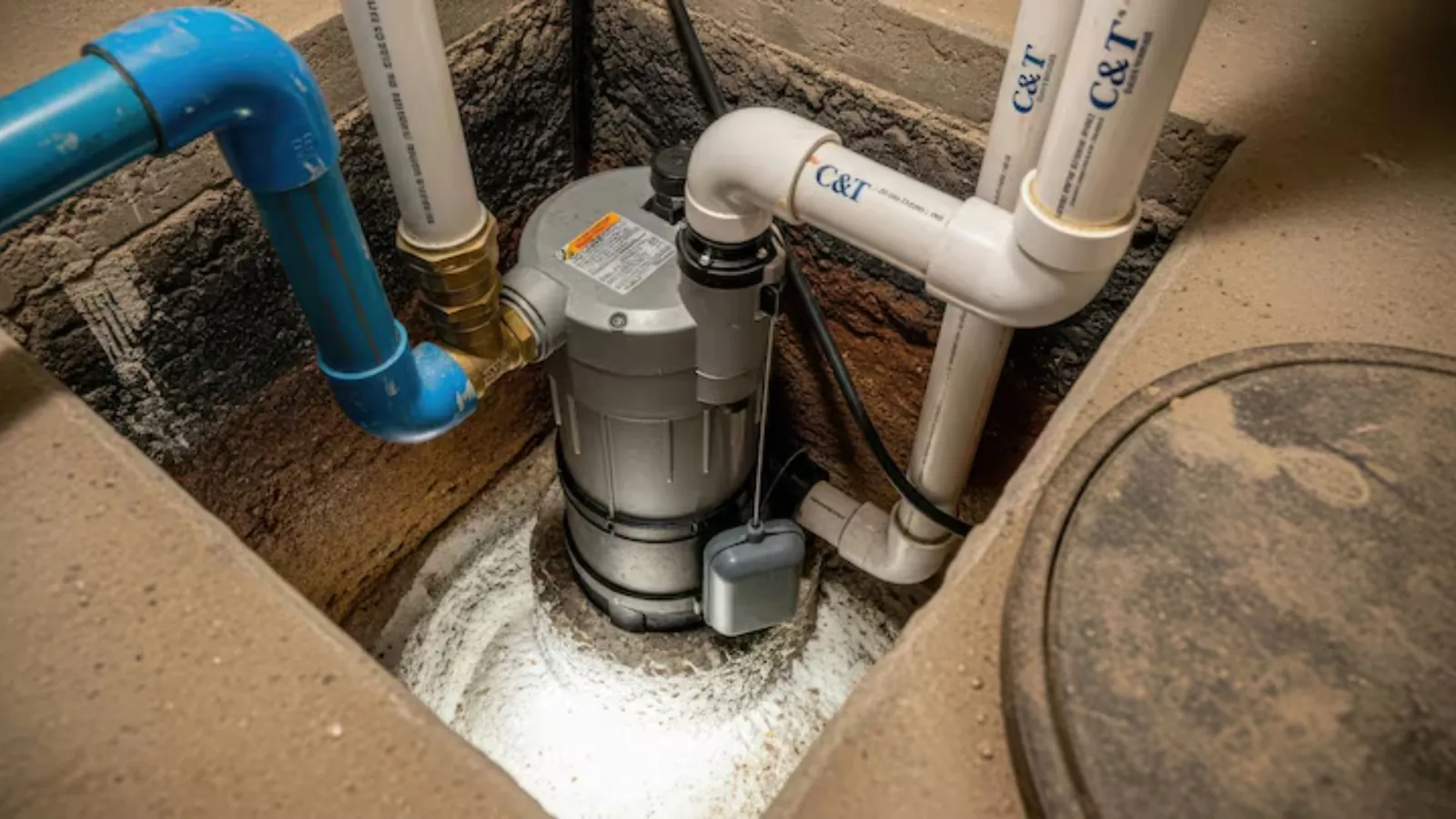
A sump pump installation gives groundwater a place to go before it reaches your floor. A pit is set below the slab, a pump sits in it, and a discharge pipe carries the water outside and away from the foundation. In Miamisburg, where the water table runs high in many low areas, that simple system is often the difference between a dry basement and a flooded one.
This guide covers how an installation works, how it relates to waterproofing, what drives the price and what to check before you hire anyone. If your pump is failing right now, see sump pump repair and call the 24/7 line.
What an installation involves
The crew cuts a hole in the basement slab at the lowest point, digs a pit and sets a liner in it. A pump goes in the liner, with a float switch that starts it as water rises. A check valve on the discharge keeps water from flowing back, and a pipe runs to the outside, ending several feet from the house.
Each part matters. A pit set in the wrong spot never collects the water. A discharge that ends beside the foundation sends the same water back to the pit all day. Ask where the water will go before the work starts.
Pump, drain tile and waterproofing are not the same thing
People use waterproofing as a catch-all, but it covers several jobs. A sump pump removes water that has collected. Interior drain tile is a perforated pipe along the footing that carries water to the pit. Exterior waterproofing seals and drains the outside of the wall. Coating the inside of a wall with a sealer does not stop groundwater and often peels.
A pump alone works when water comes up through one spot. A basement that seeps along every wall joint usually needs drain tile as well. Our own scope is the plumbing side, meaning the pit, the pump, the discharge and the supply lines. For larger exterior work, see basement waterproofing for how we help you decide.
Choosing where the pit goes
The pit belongs at the lowest point of the slab, or where water already shows up. Walk the basement after a heavy rain with a flashlight, and note where the floor is wet first. A pit at that spot collects water before it spreads. A pit placed for the convenience of an outlet may sit high and never fill.
Keep the pit away from the furnace, the water heater and the electrical panel when you can. Leave room around it to lift the pump out, and keep the lid sealed to hold back radon and humidity.
If the home has a floor drain that backs up when it rains, tell the installer. A floor drain tied to the sewer and a pit tied to the outside need to stay separate, since sending stormwater into the sewer is a code problem.
Pump types at a glance
Pick based on how the basement behaves and how reliable the power is.
| Type | Best for | Watch for |
|---|---|---|
| Submersible | Quiet, finished basements | Harder to service, short life if it runs constantly. |
| Pedestal | Easy access and lower cost | Louder, less powerful. |
| Battery backup | Storm outages | Battery needs testing and replacing. |
| Water-powered backup | Homes with strong city water pressure | Uses water and needs a backflow device. |
Questions to ask a contractor
A good installer answers these without hesitation.
- Where will the water discharge.It should end well away from the foundation and not near a neighbor's wall.
- What size pump and why.Horsepower should match how fast your pit fills.
- Is there a check valve.Without one, the pump cycles over and over.
- What backup do you recommend.A power cut during a storm is when pumps matter most.
- Who handles permits.Ask the building department and Public Health which approvals apply.
What affects the price of a sump pump installation
Prices swing a lot from house to house. These are the factors that drive them.
- Slab thickness and accessCutting a thick slab or working in a tight corner takes longer.
- Pump size and backupA larger pump or a battery backup adds equipment.
- Discharge routeA long run, or a run that must cross a driveway, adds labor.
- Drain tileA full interior perimeter drain costs far more than a single pit.
- Finished spaceFlooring and walls may need removal and restoration.
Ask for each item listed separately so you can compare bids.
Want your real number? Call (326) 465-0294
Signs the system needs more than a pump
A pump that runs every few minutes in dry weather may be fighting a high water table, or recycling water from a bad discharge. A pit that fills while the pump is silent has a dead switch or motor. Water on the floor with a working pump suggests the water is entering somewhere the pit cannot reach. Efflorescence, the white chalky powder on walls, shows where moisture has been moving through masonry.
Before you commit to a major job, rule out the cheap fixes. Extend downspouts several feet from the house, grade the soil away from the walls and clean the gutters. Those steps cost little and often cut the water load on the pump by half.
Maintaining the system once it is in
A pump is not set and forget. Twice a year, pour a bucket of water into the pit and watch the pump start, empty the pit and shut off. Clean the pit of silt and debris. Check the discharge outlet outside for clogs, ice and leaves. Test the battery backup, and replace the battery every few years.
Keep a record of the pump's age and model. When it reaches eight years, plan its replacement before it fails. A pump that is quietly working for ten years is lucky, not reliable.
Codes and standards that apply
Sump pump circuits follow the National Electrical Code, known as NEC, which calls for ground fault protection in damp areas. Discharge piping follows the Ohio Plumbing Code in Ohio Administrative Code Chapter 4101:3.
A cheap warning sign worth watching
Watch the pump's run time on a rainy day. If it starts to cycle every minute or runs without stopping for hours, the water load is more than it was. That can mean heavier rain, a rising water table or a failing check valve. Catching a trend early gives you time to act before the pit overflows.
What the Miamisburg water table means for your pump
Miamisburg draws its drinking water from wells beside the Great Miami River, part of the Great Miami River Buried Valley Aquifer System. The same aquifer that supplies the city can rise into basements in low-lying neighborhoods after long wet spells.
In practice, that means a working pump is not a luxury in many parts of town. If your home is near the river or in an older, lower section, plan for a backup power source and test the pump every spring.
Source: City of Miamisburg water reports at cityofmiamisburg.com/water-reports
Questions about sump pumps and basement water
A handy owner can swap a pump in an existing pit. Cutting a new pit, running the discharge and wiring the outlet is work for a professional.
Seven to ten years is common. A pump that runs often wears out faster.
It handles water that reaches the pit. Seepage through walls or from plumbing leaks needs other fixes.
Ideally yes, on a grounded outlet protected by a GFCI. Ask an electrician about it.
Several feet from the foundation, on ground that slopes away, and not into a neighbor's yard or the sanitary sewer.
It depends on your lot. Homes near the Great Miami River or in low areas often do. A plumber can check for signs such as efflorescence, damp floors or an old pit.
Basement taking on water? Call the 24/7 line and a plumber can test or replace the pump. We work in Moraine and Miami Township too.
Call (326) 465-0294