Most hidden leaks announce themselves quietly. The water meter keeps moving with every tap off, the bill climbs for no reason, or a ceiling stain appears after a dry week. Our 24/7 line is open for emergency leak detection in Miamisburg, OH. If water is actively dripping through a ceiling, shut off the main valve and switch off the power to that room before you call.
Finding the exact spot is the hard part. Opening walls at random costs more than the leak itself, so we locate the break first and cut only where we must.
When a hidden leak is an emergency
A slow leak can wait for a daytime visit. These situations cannot.
- Water coming through a ceiling or wall.Shut off the main, switch off the circuit for that area and call right away.
- A warm or damp spot on a floor.A hot water line may be leaking under the surface and can wet the structure fast.
- The meter spins after every fixture is off.Water is leaving the house somewhere. The faster it spins, the more urgent it is.
- Sound of running water in a silent house.Pressurized water is escaping inside a wall or under a slab.
Meter still running or a high water bill
The simplest test is free. Turn off every tap and appliance, then watch the meter dial or low-flow indicator. If it moves, water is going somewhere. A toilet that leaks silently into the bowl is the most common culprit, followed by an irrigation line or a buried service line.
The City of Miamisburg's Public Works office, at (937) 847-6635, handles water and sewer billing questions and can confirm whether your meter is registering usage normally. That call tells you whether the problem is inside your walls or on the utility side. If the meter really is running, we trace the leak from the meter to the house first and then through the plumbing inside.
How we pinpoint the leak without tearing out the wall
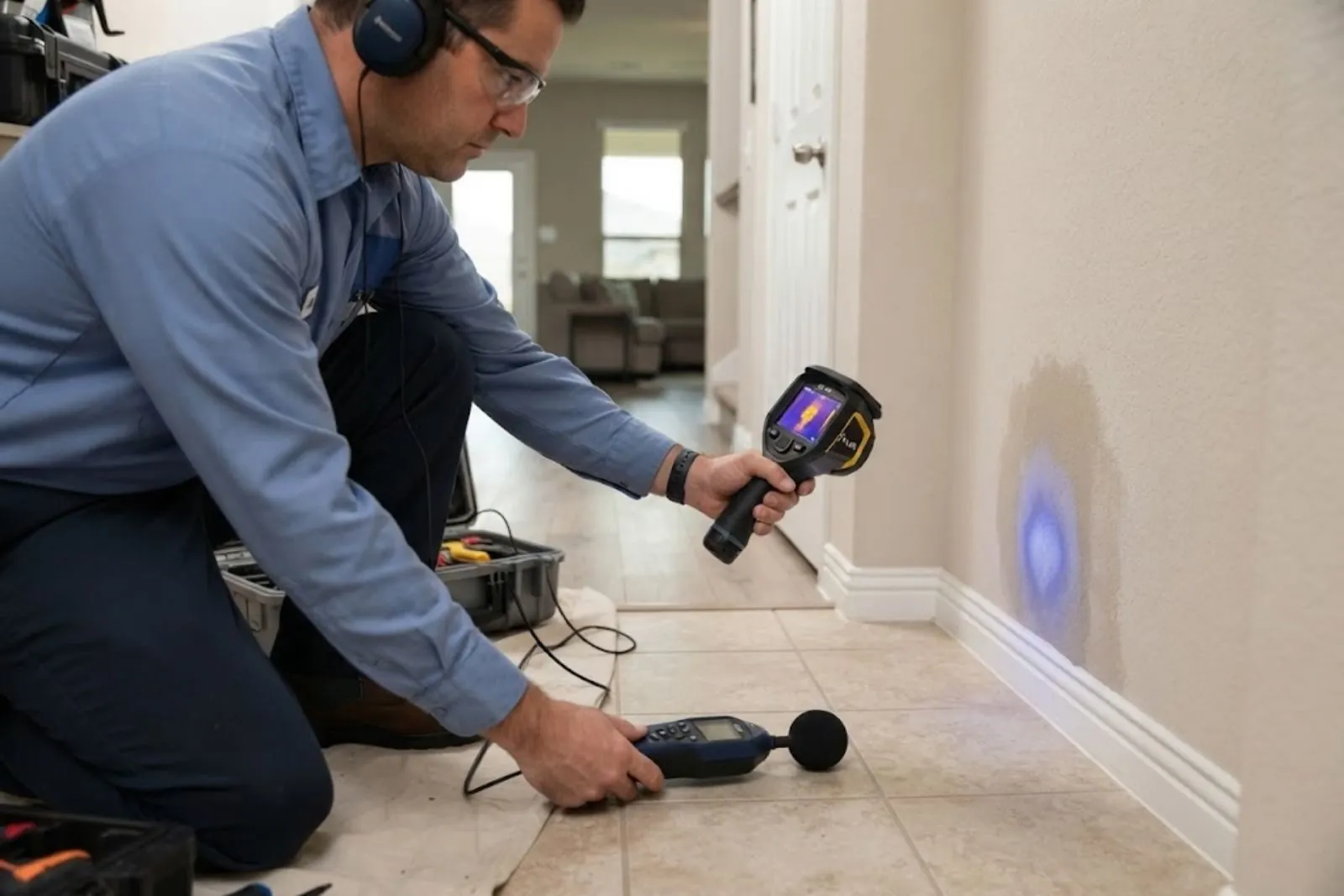
We use several methods and match them to the problem. Pressure testing isolates which line is losing water. Acoustic listening picks up the sound of a pressurized leak through a floor or wall. Thermal imaging shows warm streaks from a hot water line, and a moisture meter confirms where drywall is actually wet.
Once the leak is located, we explain the fix. A leaking fitting behind a wall is a short repair. A failing run might call for repiping, and a break in a buried line leads to line repair or water service replacement. Sump pumps and drains are separate, so we also check sump pump discharge when water shows up near a basement wall.
Where hidden leaks usually hide
These are the spots we check first, in rough order of how often they fail.
- Ceilings and walls under bathrooms.Shower valves, tub drains and supply stops leak slowly into the space below.
- Basements and under-house areas.Water finds its way along joists and collects at the lowest point, so the wet spot is not always under the leak.
- Yards, meter boxes and irrigation lines.A buried line can leak for months before the lawn shows it.
- Water heaters and their connections.A weeping fitting or tank seam leaves a wet floor and rust stains.
Leak detection methods compared
Different leaks call for different tools.
| Method | Best for | Limit |
|---|---|---|
| Meter and pressure test | Deciding whether a leak exists and which line | Does not give an exact location. |
| Acoustic listening | Pressurized supply leaks in floors and walls | Plastic pipe carries sound poorly. |
| Thermal imaging | Hot water lines and wet insulation | Cold water leaks show weakly. |
| Moisture meter | Confirming wet drywall or subfloor | Shows wet, not the source. |
Codes and standards behind this work
Pressure tests follow the guidelines in the Ohio Plumbing Code, which the state adopts in Ohio Administrative Code Chapter 4101:3 and the pipe manufacturer's test limits. We hold a line only at the pressure the pipe and fittings are rated for, since over-pressure testing can cause the failure it is meant to find.
What affects the cost of leak detection
You get a clear price before work starts. Here is what drives it.
- Size of the homeMore plumbing to test means more time on site.
- Type of leakSupply leaks, drain leaks and buried lines need different equipment.
- AccessFinished basements and slab floors make listening and testing harder.
- Repair afterwardFinding the leak and fixing it are priced separately so you can decide at each step.
- Hour of the callNights and holidays are billed at an after-hours rate.
Insurers often treat the water damage from a sudden leak differently from the cost of finding the leak. Ask your agent whether the detection fee falls under your policy before you start.
Want your real number? Call (326) 465-0294
Leak Detection questions in Miamisburg
Yes. A leak that is soaking a ceiling or flooding a basement is handled at any hour, including nights and weekends. A slow leak, such as a meter that keeps turning, can usually be booked as a scheduled visit.
Check the meter with everything off, look for stains and musty smells, and compare this month's bill with the same month last year. A rise with no change in habits points to a leak.
In many cases yes, with acoustic and thermal tools. Most Ohio homes have basements, so slab leaks are less common here, but garages and additions sometimes sit on slabs.
Not to find it. We locate the spot first and open only what is needed to repair it.
Yes. Low areas near the Great Miami River and the Old Miamisburg core are included, and groundwater near the river can mimic a leak, so we confirm with a meter test before we cut.