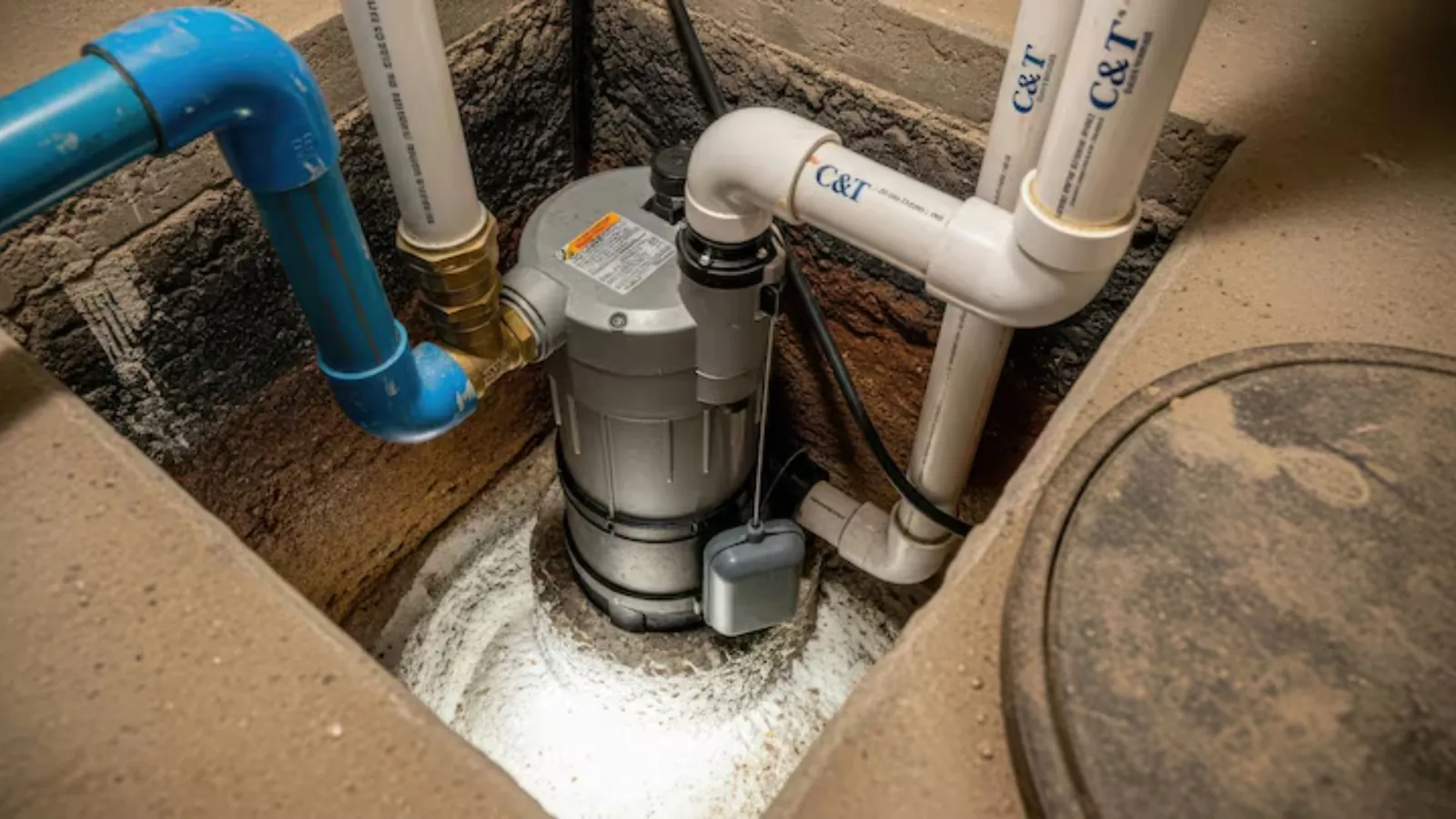
A sump pump fails when you need it most, during heavy rain with a full pit. Our 24/7 line is open for emergency sump pump repair in Miamisburg, OH. If the pit is filling and the pump is silent or running without moving water, keep out of standing water near outlets, move stored items off the floor and call. A plumber can usually be there.
A working pump is only half of protection. The check valve, the discharge line and the power supply have to work too, and a battery backup can cover a power cut during the storm.
When a sump pump failure is an emergency
These signs mean water is on the way.
- The pit is full and the pump is silent.The motor, switch or power has failed.
- The pump runs constantly but water is not leaving.A failed impeller or a blocked discharge line.
- Water is on the basement floor.Shut off power if water is near outlets or the panel, from a dry spot.
- A loud noise or burning smell.Turn off power at the breaker and call.
How sump pumps fail
A float switch that sticks keeps the pump from starting or from stopping. A worn motor overheats and stops. Silt and gravel can jam the impeller. A check valve that fails lets water flow back into the pit and restart the pump, which wears it out. A frozen or blocked discharge line sends water back toward the house.
Pumps in Miamisburg run hard because of the geography. The city sits on the Great Miami River's buried valley aquifer, and groundwater sits high in many low-lying areas. After wet weeks, a pump can run steadily for days, so one that is ten years old is living on borrowed time.
Repair, replace and back up
We test the pump, the switch, the check valve and the discharge, and then tell you which part has failed. A new float switch or check valve is a small repair. A pump that is old, noisy or corroded is better replaced. We can fit a battery backup or a second pump so a power failure does not leave the basement unprotected.
A pump is the first layer. For a basement that stays damp or leaks at the walls, basement waterproofing addresses the cause, and a wet floor with no storm may be a leak detection question rather than groundwater.
Pump types and what they suit
Choose by how your basement behaves.
| Type | Strength | Limit |
|---|---|---|
| Submersible | Quiet and sits in the pit | Harder to reach for service. |
| Pedestal | Motor above the pit and easy to service | Louder and less powerful. |
| Battery backup | Runs during power cuts | Needs a charged battery and testing. |
| Water-powered backup | Needs no battery | Needs city water pressure and uses water. |
Test your pump before storm season
A two-minute check can save a basement.
- Pour a bucket of water into the pit.The pump should start, empty the pit and stop.
- Listen for grinding or rattling.Noise means a worn motor or a stuck impeller.
- Check the discharge outside.It should run clear and away from the foundation.
- Test the backup.Unplug the main pump and see whether the backup starts.
Codes and standards behind this work
Pump electrical work follows the National Electrical Code, known as NEC, which calls for ground fault protection in wet locations. Discharge piping and the connection to the house system follow the Ohio Plumbing Code, which the state adopts in Ohio Administrative Code Chapter 4101:3, and stormwater should not be tied into the sanitary sewer.
What affects the cost of sump pump repair
You get a clear price before work starts.
- Repair or replacementA switch or check valve is a small repair, a new pump costs more.
- Pump sizeLarger horsepower costs more.
- Backup systemA battery or second pump adds equipment and labor.
- Discharge workA new or rerouted discharge line adds time.
- Hour of the callStorm-night calls carry an after-hours rate.
Standard homeowners policies often exclude groundwater and sump failure damage unless you add a water backup endorsement. Read your policy before storm season.
Want your real number? Call (326) 465-0294
Sump Pump Repair questions in Miamisburg
Yes. A sump pump that fails during a storm is a night-and-weekend call for us. If water is rising in the pit, move valuables up, keep out of standing water near electrical outlets and call the 24/7 line.
Many last seven to ten years. Heavy use shortens that.
A high water table, a failing check valve or a leaking line into the pit are common causes.
A backup is worth it if flooding would damage finished space and your area loses power in storms.
Yes. Low-lying homes near the Great Miami River and in Old Miamisburg often rely on a pump, and we check the whole system.