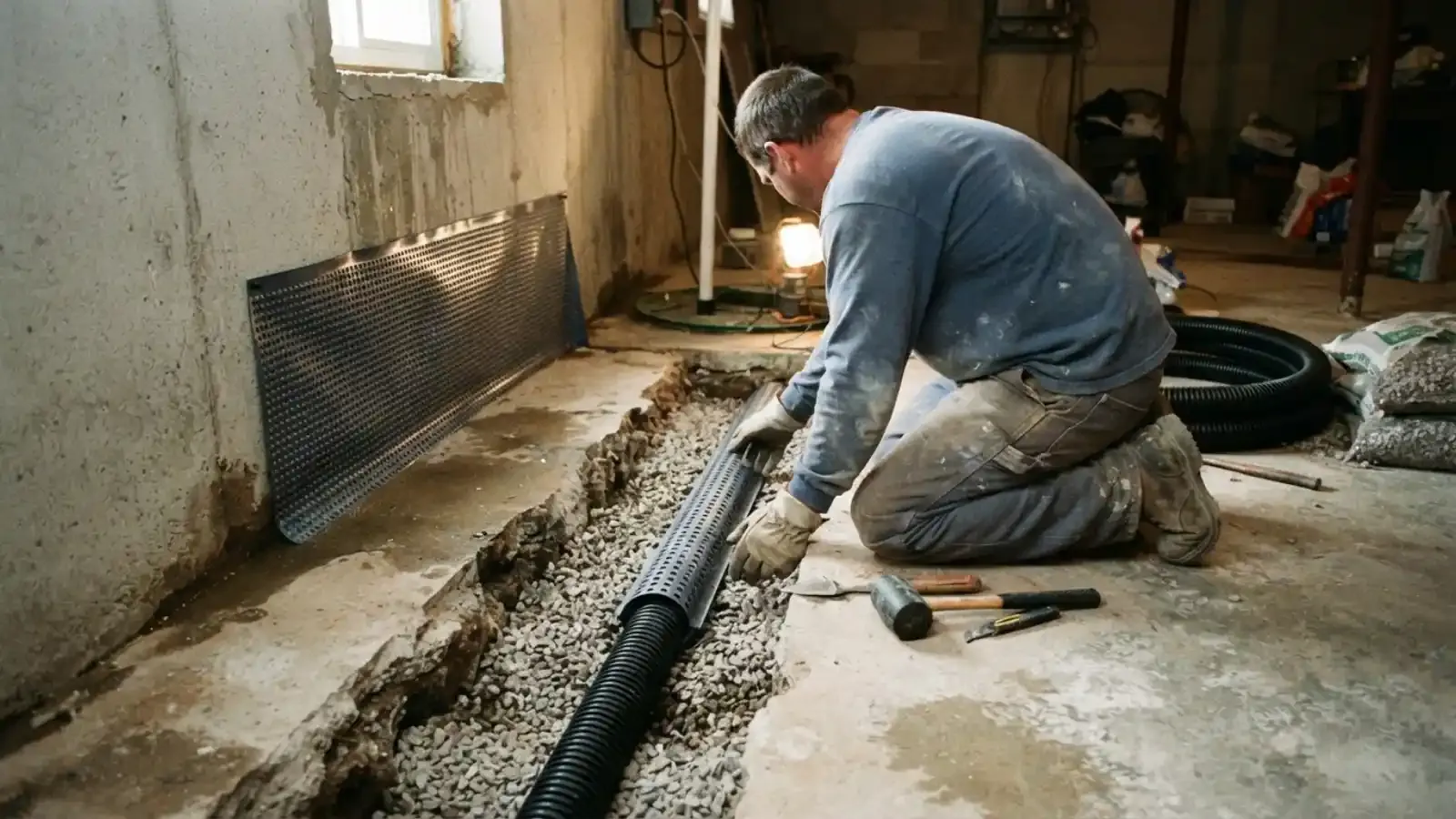
A wet basement has a cause, and the cause decides the fix. Groundwater, surface water, a leaking pipe and condensation all look similar and need different answers. This page covers the plumbing side of keeping a basement dry, such as sump pumps, drains and discharge lines. If a pump is failing during a storm, see sump pump repair, which is our emergency page.
We start by finding where the water enters. A sealed wall with the wrong cause behind it will not stay dry.
Where basement water comes from
Surface water runs toward the house from a low grade, from short or missing downspout extensions and from window wells. Groundwater rises through the floor or the wall joint when the water table is high. Plumbing leaks come from supply lines, drains or a water heater. Humidity condenses on cold pipes and walls and looks like a leak.
A quick test helps. Tape a square of plastic to the wall or floor and check it the next day. Moisture under the plastic comes from the ground, and moisture on top comes from the air. A leak from a pipe is a leak detection job.
Why Miamisburg basements stay damp
Miamisburg sits on the Great Miami River and over its buried valley aquifer, which feeds the city's wells. Groundwater is close to the surface in many low-lying parts of town. The river overflowed in March 1913 and prompted the levee system built by the Miami Conservancy District after 1915, which protects the city from river floods. Levees do not stop rising groundwater, and a wet spring can fill a basement even when the river stays in its banks.
Practically, that means a working sump pump is not optional for many homes, and a basement built below the water table needs a drain system around its footing as well as a pump.
Plumbing leak or groundwater, how to tell
Run a simple check before you spend money. Turn off every fixture and the water heater feed, then read the water meter and read it again an hour later. If the dial moved, you have a leak in the supply side and need leak detection. If the meter stays still and water still appears, the source is groundwater, surface water or a drain.
Look at the timing. Water that appears after rain or snowmelt is almost always outside water. Water that shows up on a dry week, near a bathroom or the water heater, points to a pipe. A damp patch on the wall that dries out in summer often comes from a window well or a downspout, and the fix there costs little.
Take photos each time you see water, with the date, and note the weather. That record helps whoever looks at the basement, and it supports an insurance claim if you need one.
Options for a wet basement
From simple to major.
| Option | Helps with | Limit |
|---|---|---|
| Downspout extensions and grading | Surface water | Does not stop groundwater. |
| Sump pump and pit | Rising groundwater | Needs power and maintenance. |
| Interior drain tile | Water at the wall and floor joint | Needs a pump to discharge. |
| Exterior waterproofing | Water pressing on the wall | Highest cost and disruption. |
| Dehumidifier | Condensation | Does not stop leaks. |
Cheap fixes to try first
Start outside.
- Extend downspouts several feet.Water should leave the foundation, not pool beside it.
- Check the grade.The soil should slope away from the house.
- Clean gutters.Overflow soaks the wall.
- Cover window wells.A clear cover keeps rain out of the well.
Codes and standards behind this work
Sump discharge and basement drainage piping follow the Ohio Plumbing Code, which the state adopts in Ohio Administrative Code Chapter 4101:3, and the pump's electrical connection follows the National Electrical Code, known as NEC. Public Health, Dayton and Montgomery County at (937) 225-4421 can say which permits apply to your project.
What affects the cost of basement drainage work
You get a clear price before work starts.
- Source of waterSurface fixes cost less than interior drains.
- Length of drain tileA full perimeter costs more than a section.
- Pump and backupA bigger pump or battery backup adds equipment.
- Finished spaceFlooring and walls may need removal.
- Discharge routeA long run away from the house adds cost.
Insurance often excludes groundwater seepage. Check your policy for a water backup endorsement.
Want your real number? Call (326) 465-0294
Basement Waterproofing questions in Miamisburg
Sometimes. A supply or drain leak is plumbing, and groundwater is a drainage problem. We test to tell which.
We focus on pumps, drains and discharge. For major exterior work we explain what to look for in a contractor.
It handles rising groundwater at the pit. Surface water and wall leaks need other fixes.
It helps with humidity. It does not stop water coming in.
We check the pump, the pit, the discharge line, floor drains and supply lines, then tell you whether the water is a plumbing issue or a drainage issue.