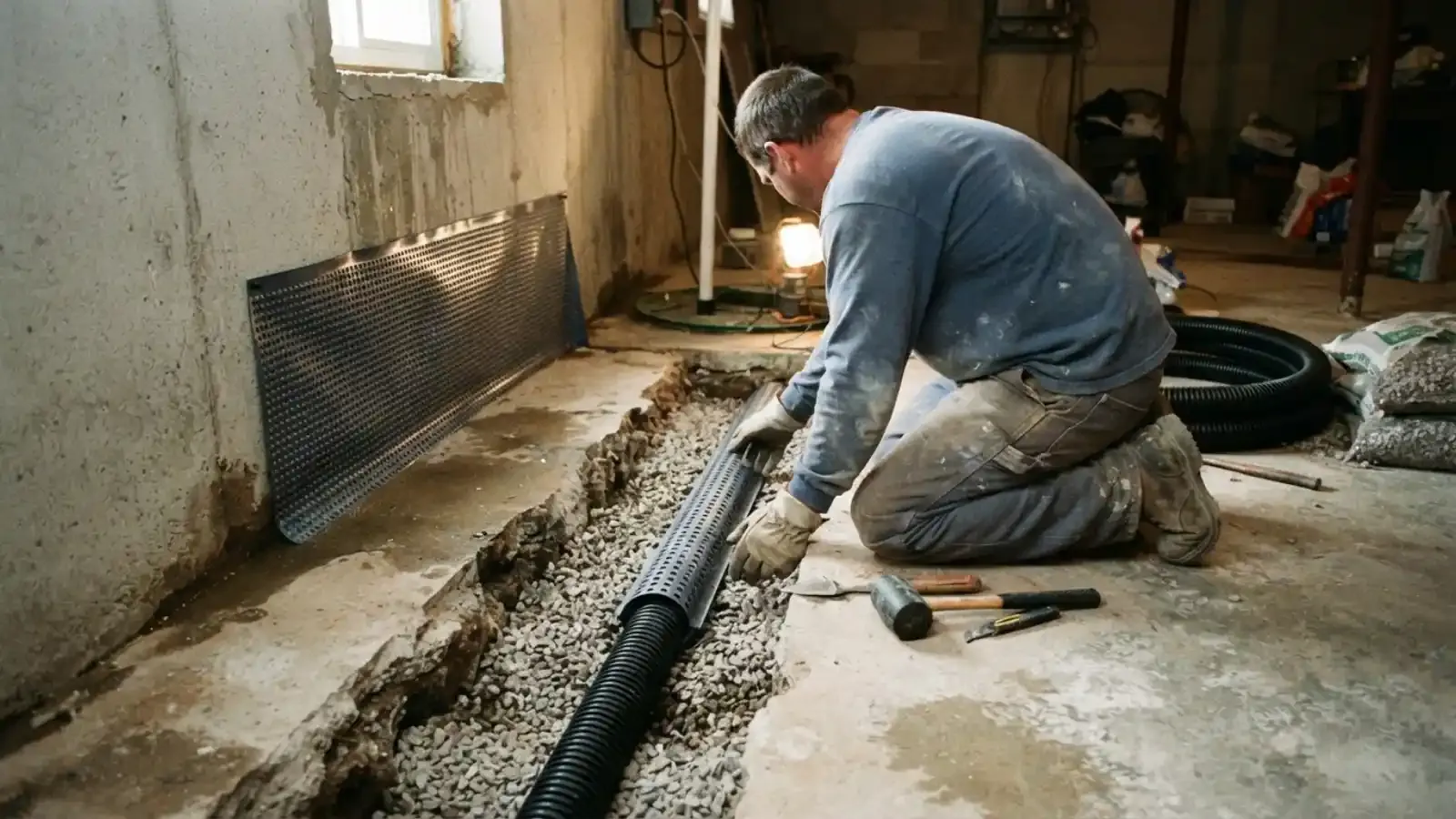
Basement waterproofing materials fall into a few groups: surface sealers, drainage systems, wall membranes, crack injections and pumps. Each solves a different problem. A sealer paint holds back dampness and does little against pressure from groundwater. A drain tile system and a sump pump move water away. Picking by name instead of by problem is the most common and most costly mistake.
This guide explains each material, what it does and what it cannot do, so you can read a bid with confidence. For the plumbing side, see basement waterproofing, and if a pump has failed, sump pump repair.
Common materials and what they are for
A quick map before the details.
| Material | What it does | Limit |
|---|---|---|
| Masonry sealer or paint | Reduces dampness through block and concrete | Fails against hydrostatic pressure, can peel. |
| Hydraulic cement | Plugs active leaks at cracks and joints | Rigid, may crack again with movement. |
| Epoxy or polyurethane injection | Seals a crack from the inside | Fixes the crack, not the water source. |
| Interior drain tile | Collects wall and footing water and moves it to a pit | Needs a pump and maintenance. |
| Drainage membrane | Channels wall water down to the drain | Does not stop water entering. |
| Exterior membrane and drain | Blocks and drains water outside the wall | Highest cost, requires excavation. |
| Sump pump | Pumps collected water away | Needs power and a backup. |
Sealers and paints
Waterproofing paint is the cheapest option, and it has the narrowest use. It works on a wall that is merely damp. It does not hold when water presses against the wall from outside, which is how groundwater behaves after a wet spell. The paint blisters and peels, and a homeowner is left with a mess and the same leak.
Use it only after the source of water has been dealt with, and only where the wall is dry enough to take the product. A damp wall that gets worse after rain needs drainage, not paint.
Drain tile, membranes and pits
An interior drain system sets perforated pipe along the footing, under or beside the floor slab, and covers it with stone. Water that comes through the wall or the joint falls into the pipe and runs to a sump pit. A plastic membrane on the wall guides leaks down to the drain. This is the usual long-term fix for seepage along the walls.
The system works as long as the pit and pump work. That is why the pump, its check valve and its discharge line get as much attention as the drain.
Crack repair, what works and what does not
A vertical crack in a poured concrete wall is often a shrinkage crack from the day the wall cured. Injection of polyurethane or epoxy from the inside seals it and can be done in an hour or two. A stair-step crack in block, or a horizontal crack, signals movement or pressure, and that is a structural question for an engineer before it is a waterproofing question.
Hydraulic cement stops an active leak in minutes, but it is rigid, and a crack that moves will crack it again. Treat it as a quick patch while you work out the real fix, not as the fix itself.
Questions to ask about any material
These keep a sales pitch honest.
- What problem does this solve.A good answer names the source of the water.
- What happens if the power fails.A pump needs a backup.
- What is the warranty and who stands behind it.Read what it covers and for how long.
- Is it transferable.A transferable warranty helps at resale.
- What maintenance is needed.Pits, pumps and drains need cleaning.
What affects the cost of waterproofing
Costs vary from a tube of caulk to a major excavation.
- The source of waterSurface fixes cost far less than interior drains.
- Length of wallMore footage means more material and labor.
- Access and finishA finished basement adds removal and rebuilding.
- Pump and backupA pump, a battery and a second pump add equipment.
- Exterior excavationDigging around the foundation is the largest cost.
Get at least two bids and ask each contractor to name the cause of the water.
Want your real number? Call (326) 465-0294
How long materials last
Paint and surface sealers may last a few years before they peel. Injection repairs last as long as the wall does not move. Interior drain tile and membranes often last decades. A sump pump lasts seven to ten years, and a battery for a backup lasts three to five. Plan the replacements, since the pump is the part most likely to be replaced first.
Start outside
Cheap outside fixes remove a lot of the load. Extend downspouts so they discharge several feet from the wall. Grade soil away from the house. Clean gutters. Seal or cover window wells. Repair cracked driveways or walks that slope toward the foundation. If the basement stays dry after those steps, you saved the cost of an interior system.
Humidity, condensation and dehumidifiers
Not every wet basement leaks. In summer, warm moist air meets a cool wall and condenses, leaving damp spots and a musty smell. A dehumidifier sized for the space, a drain hose to a floor drain and air movement often solve it. Insulating cold water pipes stops them from sweating onto the floor.
Tape a square of plastic to the wall for a day. Moisture under the plastic comes from the wall, and moisture on top comes from the air. That cheap test avoids paying for a leak repair on a condensation problem.
Codes and standards that apply
Sump pump circuits follow the National Electrical Code, known as NEC, and drainage piping follows the Ohio Plumbing Code in Ohio Administrative Code Chapter 4101:3. Ask any contractor which standards a product or system is built to.
Where plumbing fits in
Plumbers handle the water side of waterproofing: pumps, pits, discharge lines, floor drains and any supply or drain leak that mimics a wall leak. A contractor who seals walls and a plumber who maintains the pump often work together. Make sure someone owns the pump, since it is the part that fails when it matters.
The flood history behind Miamisburg's drainage
The Great Miami River overflowed at Miamisburg on March 25, 1913, in one of the worst floods in Ohio history. The Miami Conservancy District was formed in 1915, and levees and walls along the river came after it. The city's streets and basements near the river sit in that protected floodplain.
Levees control river floods. They do not stop groundwater from rising in a wet season. In low parts of town, a basement may still need a pit, a pump and a backup, even though the river stays in its banks.
Source: Miami Conservancy District history at mcdwater.org and the City of Miamisburg
Questions about basement waterproofing materials
It depends on the source of water. Drainage solves seepage, sealers handle dampness and pumps remove collected water.
On a damp wall with no pressure, yes. On a wall with active seepage, usually not.
Many systems last decades, if the pit and pump are maintained.
It can be for severe cases. Many homes get good results from interior drains and a pump.
Cheap outside steps and crack sealing are practical for many owners. Drain tile, pits and pumps are better left to professionals.
Levees protect from river floods, not from groundwater. Low-lying homes may still need drains and a pump.
Wet basement and not sure what to do? Call and we check the pump and drains first. We serve Miami Township and Springboro, and a failing line may need leak detection.
Call (326) 465-0294