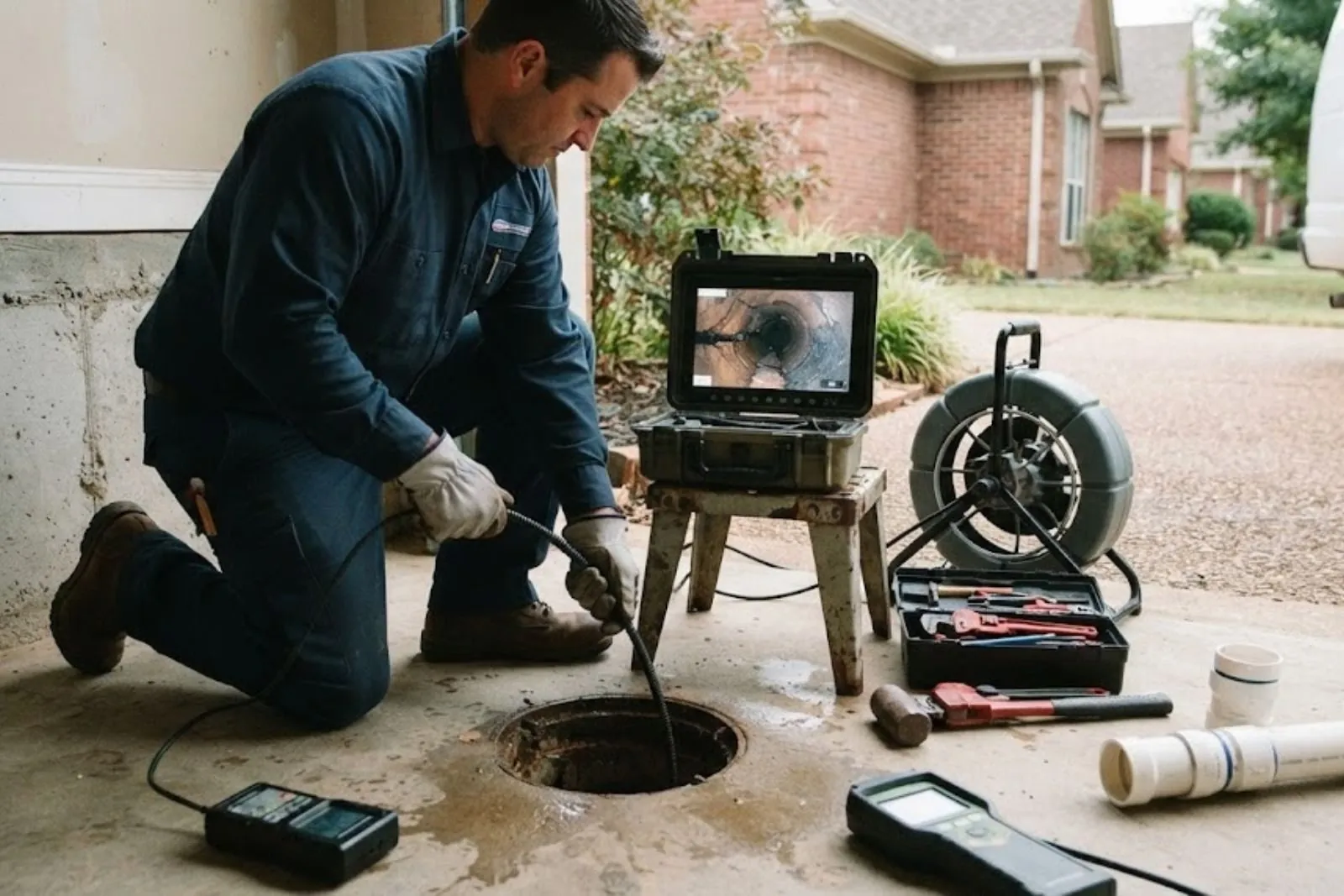
Sand does clog drains. It does not dissolve, it settles in low spots and it packs into dense plugs that a chemical cleaner cannot touch. A few grains rinse out. A handful from a beach bag, a sandbox, a pool filter or a flooded basement can fill a trap or a bend in the pipe. The fix is mechanical, and the best fix is to keep it out.
This guide explains how sand behaves in drains, how to clear it and how to prevent a repeat. If the line is already blocked, see drain cleaning and call the 24/7 line for backups.
Why sand is a problem
Water carries sand along a pipe, but only while the flow is strong. When the flow slows at a trap, a bend or a flat section, the sand drops out and settles. Each new load adds to the pile. Sand also traps hair, grease and paper, and a plug of sand and grease can be as hard as cement.
Fine silt is a close cousin. It is lighter and travels farther, then packs into low points in a sewer line. Both are why a drain that is fine after a rain may slow weeks later.
Where sand shows up in a house
These are the usual sources.
- Laundry from beach trips and sports.Washer discharge carries sand into the main drain.
- Rinsing sandy toys, shoes or pets in a tub.Bathtub traps catch it first.
- Aquarium and pool filter cleaning.Filter sand and silt flush out in volume.
- Floor drains in garages and basements.Wash water carries dirt and grit in.
- Sump pits.Silt and sand wash in with groundwater and pile up over time.
How to clear it, by location
Match the tool to the plug.
| Where | Best approach | Avoid |
|---|---|---|
| Sink or tub trap | Remove the trap and flush it out | Chemical cleaner, it does not work on sand. |
| Floor drain | Wet-dry vacuum, then a hose flush | Pushing the plug further down. |
| Branch line | Cable with a retrieving head | Forcing a snake past a hard plug. |
| Main sewer line | Hydro jetting after a camera check | Running water into a blocked main. |
| Sump pit | Pump out and scoop silt | Letting it build up around the pump. |
Sand in a sewer line and in a sump pit
A sewer line with a belly, a low spot where the pipe sags, collects sand and silt in the dip. Flow slows over the low spot, the solids drop out and the pile grows. A camera shows it clearly, with a pool of water standing in the belly and a drift of sediment under it. Cleaning removes the pile, and a repair removes the cause.
In a sump pit, silt and sand settle at the bottom and can jam the float or the pump inlet. A pit should be clean enough that you can see the bottom. If it is not, clean it before the wet season starts.
Why chemical cleaners do not help
A cleaner dissolves organic matter such as hair and grease. Sand is mineral, and chemical products pass over it. The liquid may sit in the pipe and make the plumber's work riskier. The right fix is a cable, a trap cleanout or a jet of water that moves the sand out of the pipe, not through it.
For repeated sand problems, a camera shows where it collects. A belly, a low spot in the line, is a common culprit. That is a repair question, and it is where sewer line repair comes in.
How to keep sand out
Shake out towels, shoes and clothes before laundry. Rinse sandy items outside with a hose. Use a mesh drain screen in the tub and the floor drain. Do not rinse pool filters or aquarium gravel in the house sink. If a basement floods, clean up the silt with a shovel and a wet vacuum before you flush anything down a drain.
If you own a sump pump, check the pit twice a year. A pit with several inches of silt at the bottom hurts the pump, and it is a quick cleaning job.
When to call a plumber
Call if more than one fixture is slow, if you see sewage, if a cable will not pass a spot or if the clog returns within weeks. Those signs mean the sand is in the branch or the main, and a camera will show how much is there. Handling a large plug with a rented tool can push it deeper and turn a small job into a big one.
What affects the cost of clearing a sand clog
A trap cleanout is simple. A buried plug in the main is not.
- LocationA trap is quick, a main line takes more time.
- MethodCable, vacuum or jet, depending on the plug.
- Camera inspectionIt shows how much sand and where it collects.
- AccessA cleanout makes the job easier.
- Repair if a belly is foundA low spot may need a repair to stop a repeat.
Ask whether the quote covers a second pass if the first leaves some sand behind.
Want your real number? Call (326) 465-0294
Sand and the washing machine
Kids' clothes, towels from a day at a lake and work pants from a job site all carry sand. A washer lint trap and a mesh sock over the drain hose help. Shake clothes out before washing, and run an empty hot cycle once in a while to flush the machine. If the washer drain gurgles or backs up after sandy loads, the standpipe or the branch line may have a plug forming.
Codes and standards that apply
Drain and sewer piping slope and cleanout standards are set out in the Ohio Plumbing Code in Ohio Administrative Code Chapter 4101:3. A belly that holds sand is a defect against those standards, and a camera can show it.
A quick home test for a sand problem
Remove the trap under a sink or the drain cover on a floor drain and look inside. A gritty, gray sludge at the bottom, heavy for its size, is sand or silt. Photograph it. It helps the plumber decide on the right tool, and it tells you where the sand came from.
River soil and local drainage in Miamisburg
Miamisburg sits along the Great Miami River, and the city draws drinking water from wells beside it. Lots close to a river collect silt when water rises, whether from a storm, a high water table or a flooded yard. After an event like that, silt can wash into floor drains and sump pits.
If your lot is near the river, check floor drains and the sump pit after heavy rain. A pit that fills with silt cannot protect the basement.
Source: City of Miamisburg water reports at cityofmiamisburg.com/water-reports
Questions about sand and drain clogs
Sometimes, if the sand is in a trap. A solid plug often needs a cable or a cleanout.
It scours them over time and fills traps, but the main risk is the plug.
It can settle in the trap and bend. A plumber can clear it.
Unplug the pump, lift it out, scoop the silt and rinse the pit. Put the pump back and test it.
A fine mesh screen stops coarse sand and debris. Very fine silt can pass, so reduce what goes in.
Treated city water should not carry sand. Sand in drains usually comes from your own use, laundry, yard runoff or floods.
Sandy drain or floor drain that will not clear? Call and we can clear it. We serve Moraine and Miami Township. Sump pits may need sump pump repair.
Call (326) 465-0294