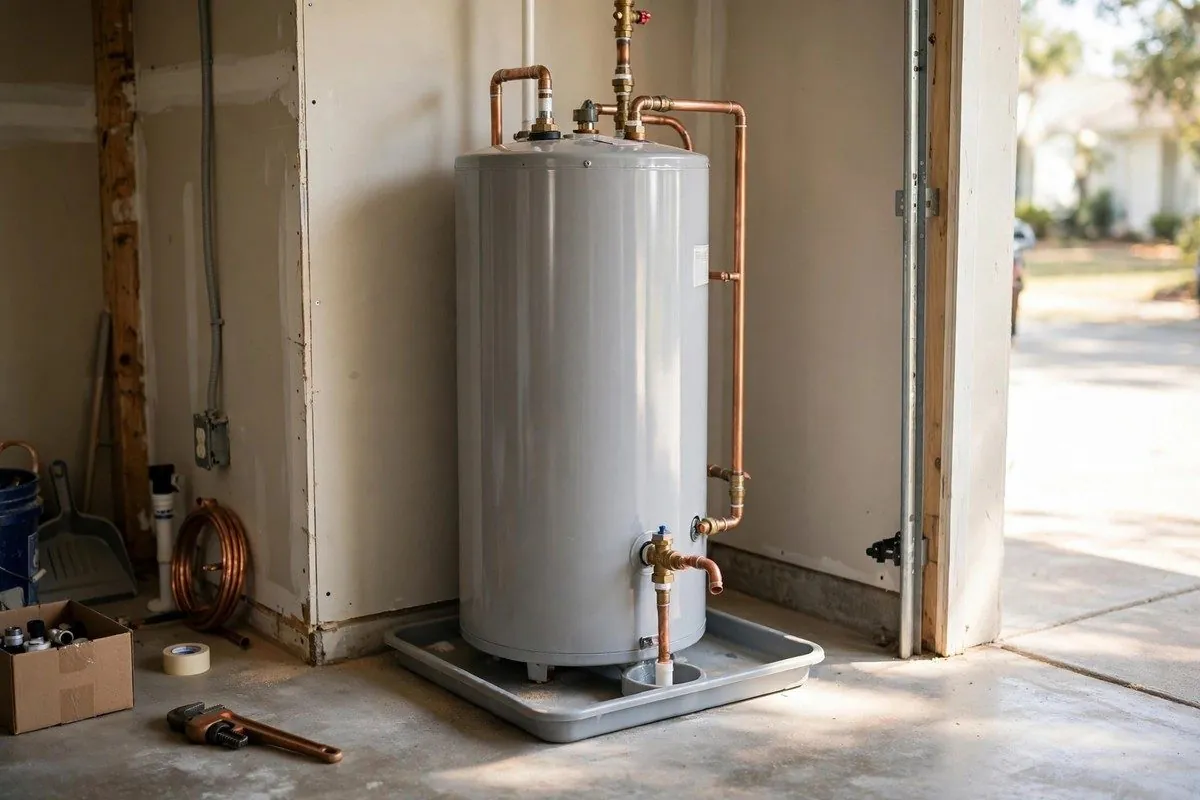
A water heater installation is a planned job when it is done well. This page covers new construction, a move from electric to gas, a relocation of the tank and an upgrade to a larger or more efficient model. If your heater has already failed and you have no hot water, see water heater replacement, which is our emergency page. Otherwise, call and we can schedule the work.
Sizing, venting and safety parts decide whether a new heater lasts and whether it is safe. A good install is quiet, drains properly and meets the local rules.
Choosing the right heater
A tank heater is the usual choice. It is simple, repairs are straightforward and the cost is moderate. Capacity should match the household, with a 40 gallon tank for one or two people and 50 to 75 gallons for larger families. Tankless units heat on demand, take less space and cost more, and the tankless page explains who benefits.
Fuel matters. Gas heaters recover fast but need proper venting and a gas line. Electric units need the right circuit and breaker. A heat pump water heater saves energy and needs room and airflow.
What a proper installation includes
The old unit is drained, disconnected and hauled away. The new heater is set on a stable base, with a drain pan where a leak could damage a floor. Supply lines get shutoff valves and flexible connectors. A temperature and pressure relief valve is fitted with a discharge pipe run to a safe spot. An expansion tank is added where the system is closed. Gas units get a sediment trap, a leak test and checked venting.
Each of those parts has a reason. A missing relief valve or a bad vent can turn a heater into a hazard. Ask whoever installs your heater to explain each part, and ask which permits apply.
Fuel and heater options
Each option fits a different home.
| Option | Good for | Consider |
|---|---|---|
| Gas tank | Fast recovery and lower running cost | Needs a flue and gas line. |
| Electric tank | Simple install without venting | Higher running cost. |
| Tankless gas | Endless hot water and small footprint | Higher cost, needs venting and a gas size check. |
| Heat pump | Lowest electricity use | Needs space, airflow and a drain. |
After the installation
When the new heater is in, we fill the tank, purge air from the lines, light or power the unit and check the temperature and pressure. We set the thermostat to a safe level, usually near 120 degrees, which reduces scald risk and saves energy. We show you the shutoff valves and the drain so you know where to look if there is ever a leak.
Flush the tank once a year to remove sediment, and test the relief valve by lifting its lever briefly and letting it snap back. If it drips afterward, call us. Keep the registration card and the model number somewhere easy to find, because warranty claims need both.
Permits and inspection
Ask before you schedule. The City of Miamisburg Building Department at (937) 847-6533 handles questions about fuel gas piping and approvals, and its inspections line is (937) 847-6532. Plumbing permits in Montgomery County route through Public Health, Dayton and Montgomery County at (937) 225-4421. The rules differ by project, so confirm what your install needs.
Prepare for installation day
These steps help the work go faster.
- Clear a path to the heater.Remove stored items within a few feet.
- Know where your shutoffs are.Locate the main water and the gas or electric shutoff.
- Plan for a few hours without hot water.A typical swap is a half-day job.
- Decide on extras.A new expansion tank, drain pan or shutoff valves are easier to add now.
Codes and standards behind this work
Installations follow the manufacturer's instructions, the Ohio Plumbing Code, which the state adopts in Ohio Administrative Code Chapter 4101:3 and the fuel gas standards the local code adopts, commonly NFPA 54, the National Fuel Gas Code. Relief valves are listed to ANSI Z21.22, and the discharge pipe is run according to the code.
What affects the cost of a water heater installation
You get a clear price before work starts.
- Type and sizeTankless and heat pump units cost more than tanks.
- Fuel and ventingChanging fuel or rerouting a vent adds work.
- Code upgradesOlder installs may need updated gas lines, venting or an expansion tank.
- AccessA heater in an attic or tight closet takes longer.
- Permit costsAsk the building department for the fee that applies.
Some utilities and manufacturers offer rebates on efficient heaters. Ask before you buy.
Want your real number? Call (326) 465-0294
Water Heater Installation questions in Miamisburg
A standard tank swap is usually a half day. A fuel change or tankless install takes longer.
Often yes. It depends on venting, gas and drain access at the new location.
Household size, number of bathrooms and peak use decide it. We size it with you.
Yes. Hauling away the old unit is part of the job.
Many households set it near 120 degrees. It limits scald risk and saves energy. A higher setting is sometimes used with a mixing valve.