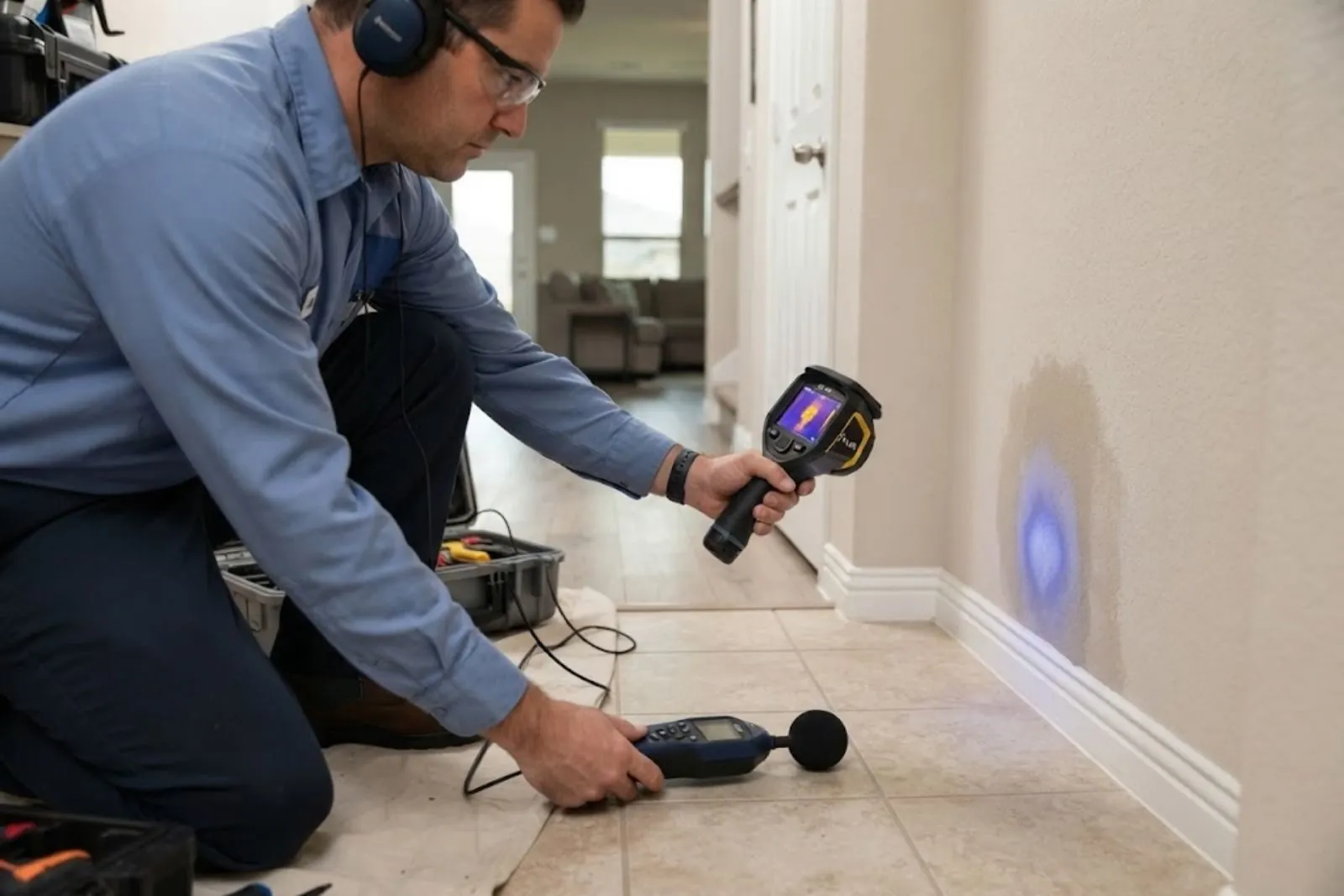
A hidden water leak is found by narrowing it down. First prove there is a leak with a water meter test. Then locate it with the right tool: acoustic listening for pressurized lines, thermal imaging for hot lines and wet materials, a pressure test to isolate a section or a camera for drains. Each method has a place, and a good plumber uses more than one.
This guide explains each method in plain terms, what you can try yourself and what to expect when you call a professional. For persistent or hidden leaks, see leak detection.
Step one: prove there is a leak
Turn off every fixture and appliance, including the ice maker and the irrigation system. Read the water meter and note the numbers, or watch the small low-flow dial. Wait an hour without using water and read it again. Any movement means water is escaping.
Then close the main valve to the house and watch again. If the meter still moves, the leak is between the meter and the house, on the buried line. If it stops, the leak is inside the house.
How we choose a method for your house
The right method depends on the clue. A high bill with no visible damage points to a meter test and then acoustic listening. A warm floor points to thermal imaging. A leak that appears and disappears with use points to a pressure test of a single line. A smell with no water points to a drain camera.
We start with what you tell us. Where did you notice it, when did it begin and what changed in the house. A good question often saves an hour of searching.
The main detection methods
Each tool answers a different question.
| Method | How it works | Best for |
|---|---|---|
| Meter test | Reads flow when nothing is on | Confirming a leak exists. |
| Acoustic listening | Microphones hear the hiss of pressurized water | Pipes in walls, floors and slabs. |
| Thermal imaging | Shows temperature differences | Hot water lines, radiant heat, wet drywall. |
| Pressure test | Holds a section under pressure and watches the gauge | Isolating which line leaks. |
| Tracer gas | Safe gas rises from the leak | Hard-to-find leaks in sealed lines. |
| Drain camera | Looks inside pipes | Sewer and drain leaks. |
Acoustic and thermal in practice
An acoustic detector has a sensitive microphone that a technician moves along the floor or wall. A leak in a pressurized pipe makes a faint, characteristic hiss, and the sound is loudest at the leak. Background noise from appliances and traffic can mask it, so the house is kept quiet.
A thermal camera reads surface temperature. A hot water leak warms the floor or wall above it, and a cold leak cools it. Evaporation from a wet area also cools it. The camera does not see through walls, but it shows where to look and where to open.
Signs of a hidden leak
Pay attention to these clues.
- A rising water bill with the same habits.The most common sign.
- The sound of running water when nothing is on.A hiss or trickle in the walls.
- Warm spots on the floor.A hot water line under a slab may leak.
- Musty odor or stains.Moisture feeds mold and discolors drywall.
- Low water pressure.A leak steals flow before it reaches the fixture.
When the leak is in the drain, not the supply
Not every leak is pressurized. A drain leak shows up as damp spots under a bathroom, a stain below a tub or a sewer odor. The meter will not move, because the water that leaks is water you already used. A camera in the drain, a fill test of a single fixture and a dye test help find these.
Drain leaks matter because they carry waste. If you smell sewage with no visible cause, call a plumber promptly, and stay out of damp areas until the source is found.
What to expect during a visit
The plumber asks questions, reads your meter, walks the house and sets up equipment. You may be asked to keep the house quiet for a few minutes. The plumber marks the suspected spot with tape or chalk, explains what was found and gives repair options with prices. Take notes and photographs, since you will want them for the repair and for insurance.
What affects the cost of leak detection
The cost depends on how hard the leak is to find.
- Method requiredSeveral methods cost more than a meter test alone.
- AccessFinished floors and walls complicate things.
- Size of the propertyA larger house takes longer.
- RepairFinding is separate from fixing.
- Hour of the callEvening calls carry a higher rate.
Ask whether the detection fee is credited toward the repair.
Want your real number? Call (326) 465-0294
Slab leaks, basements and crawlspaces
A house on a slab hides its supply lines under concrete, so a slab leak shows up as a warm spot, a hiss or a high bill. Acoustic detection is the main tool, and thermal imaging helps with hot lines. A basement or crawlspace is easier, since the pipes are exposed, and a flashlight and a dry paper towel often find a drip.
When a slab leak is confirmed, there are choices. Open the slab at the leak, reroute the line through the walls or ceiling or replace the line. We lay out the options with prices so you can choose.
Fixing and restoring
Once the leak is found, the plumber opens the smallest access possible, repairs or replaces the pipe and tests it. Leaks that come back in different places call for a conversation about repiping. Water damage restoration is a separate trade, and your insurer may have its own vendors.
Codes and standards that apply
Pressure tests follow the pipe maker's rated limits and the guidelines in the Ohio Plumbing Code, Ohio Administrative Code Chapter 4101:3. Acoustic and thermal methods are non-invasive and do not stress the pipe.
What to document for insurance
Take dated photos of the damage, the meter reading before and after and any moisture readings. Keep the detection report and the repair invoice. Many insurers pay for the damage a leak causes, and some pay for access to the leak, but not for the pipe itself. Ask your agent what your policy covers before you start.
A note on Miamisburg water bills and meters
The City of Miamisburg supplies water from five production wells beside the Great Miami River and treats it before it reaches homes. Public Works at (937) 847-6635 can answer questions about your meter and your bill.
The meter belongs to the city and sits at the edge of your property. The pipe from the meter to your house is yours. That is why the first test, closing the main valve and watching the meter, tells you which side the leak is on.
Source: City of Miamisburg water reports at cityofmiamisburg.com/water-reports
Questions about water leak detection
A simple case can take an hour or two. A large property or a hard-to-find leak takes longer.
No. The methods are non-invasive, and only the repair needs access.
Some policies cover detection when a covered loss has occurred. Ask your agent.
You can confirm one exists with the meter. Locating it takes equipment.
Read the meter with all water off, then close the main valve and read it again. That tells you which side of the house the leak is on.
Generally the owner is responsible for the line from the meter to the house. Confirm with Miamisburg Public Works at (937) 847-6635.
Think you have a leak? Call the 24/7 line and a plumber can find it. We reach West Carrollton and Miami Township. If a pipe has failed, see burst pipe repair.
Call (326) 465-0294