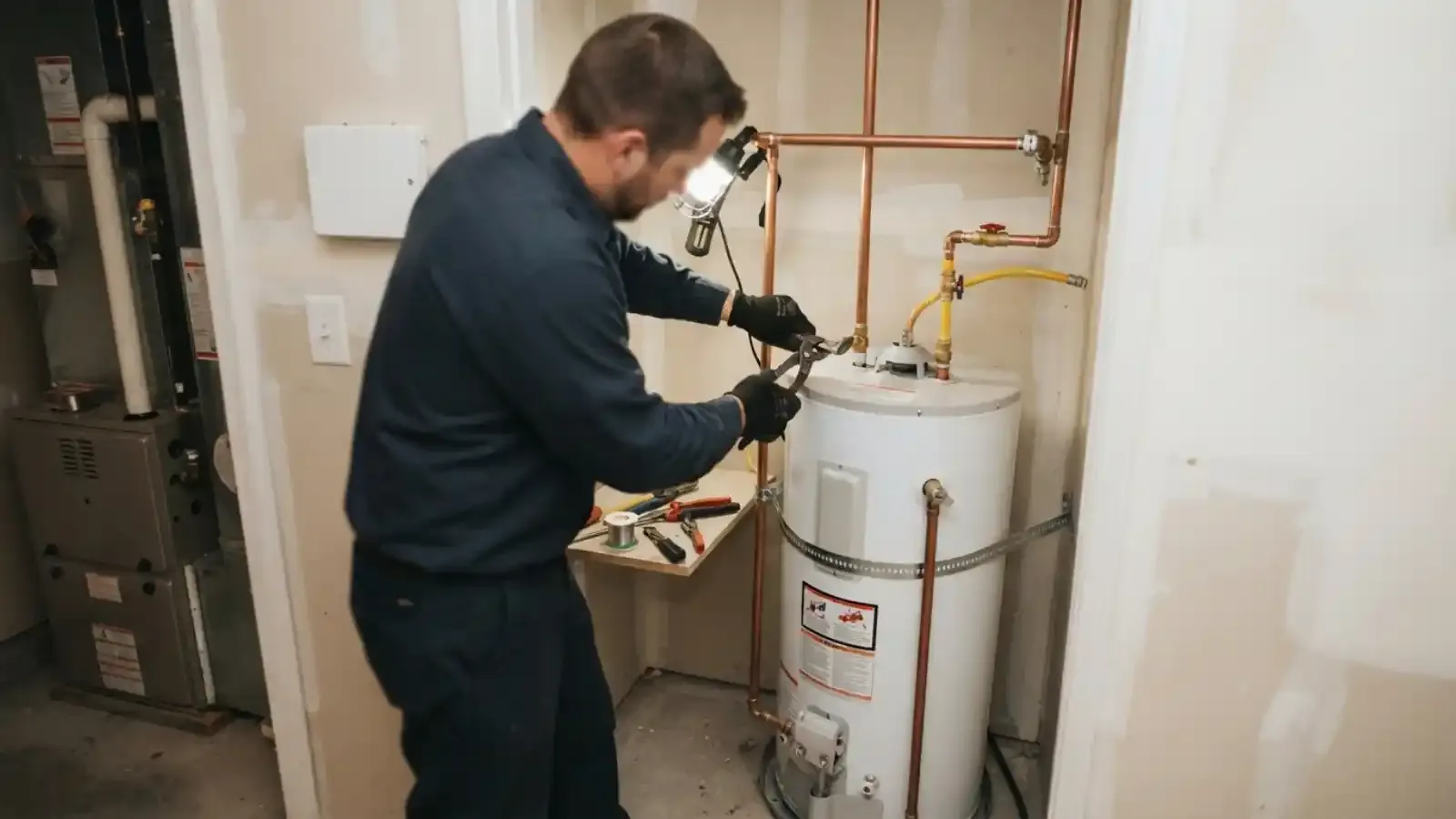
Many water heater replacements need a permit, and the right answer depends on the heater type and where you live. A gas heater involves fuel gas piping and venting, which the City of Miamisburg Building Department regulates. Plumbing permits in Montgomery County route through Public Health, Dayton and Montgomery County. One phone call settles it for your address.
This guide explains who to call, what the permit covers and what an inspector checks. If your heater has failed right now, call the 24/7 line, and the plumber will tell you what applies. For the replacement itself, see water heater replacement.
Who handles what
The Miamisburg Building Department answers approval questions at (937) 847-6533, and its inspection line is (937) 847-6532. The department regulates fuel gas piping and HVAC in the city. Public Health, Dayton and Montgomery County handles plumbing permits at (937) 225-4421. The county's building regulations office is reached at (937) 225-4622 or (937) 225-5038.
Because the local setup spreads across offices, a licensed plumber usually knows which one to call. Ask your plumber whether a permit applies and who pulls it.
What an inspection usually checks
Inspectors look for the same safety items every time.
- Relief valve and discharge pipe.The valve is rated for the tank and the pipe runs to a safe spot.
- Venting.A gas heater vents with the right material, slope and clearances.
- Gas connection.A shutoff valve, a sediment trap and no leaks.
- Expansion tank.Closed systems need one.
- Support and drain pan.The tank sits on a stable base with a drain pan where one is required.
- Combustion air.A closet heater needs enough air to burn safely.
Questions to ask the office before work starts
Call with the address, the heater type, the fuel and what you plan to change. Ask whether a permit is required, who files it, what it costs and how long inspection scheduling takes. Ask whether the inspector needs access to the heater, the vent and the relief valve discharge, and whether anyone must be home.
Write down the name of the person you spoke with and the date. If a rule changes or a question arises later, that record helps. A short note takes a minute and saves arguments.
Typical projects and the likely question
Always confirm with the office.
| Project | Why a permit may apply | Who to ask |
|---|---|---|
| Like-for-like gas heater swap | Gas piping and venting | Miamisburg Building Department. |
| Moving the heater to a new spot | New piping and venting | Building Department and Public Health. |
| Switching from electric to gas | New gas line | Building Department. |
| Tankless conversion | New venting, larger gas line | Building Department. |
Why it is worth getting right
A permitted install gets a second set of eyes on safety items. It also protects you at resale, since a buyer's inspector may ask for the paperwork. Insurers can raise questions after a loss if an unpermitted gas appliance was involved. The fee is usually small compared with the cost of fixing a mistake.
Be wary of a contractor who tells you no permit is ever needed. Rules differ by project, and a trustworthy plumber will tell you what the office says.
What homeowners can and cannot do themselves
Many owners can replace a heater themselves in some places, but a gas heater is a bigger risk than most DIY jobs. A bad vent can leak carbon monoxide into the house. A loose gas fitting can leak fuel. If you do the work yourself, plan on the same inspection a contractor would face, and have a carbon monoxide alarm installed near sleeping areas.
A plumber carries the license, the insurance and the tools to test gas and vent connections. For most homes, that is worth the fee.
What affects the total cost of a permitted replacement
The permit fee is one line. The heater and labor are the rest.
- Permit and inspection feeAsk the office for the amount that applies.
- Heater type and sizeTank, tankless and heat pump units differ in price.
- Code upgradesA new expansion tank, a vent change or a drain pan may be required.
- AccessA heater in an attic or tight closet takes longer.
- Hour of the callEmergency swaps may carry an after-hours rate.
Ask for the permit fee to be listed separately on your estimate.
Want your real number? Call (326) 465-0294
Timing a replacement around inspections
Plan the swap with the inspection in mind. If the heater is still working but old, schedule the job on a weekday so the office is open. If you can, leave the vent and relief valve discharge visible until the inspector has seen them. Ask the plumber to photograph each step, since photographs help if an inspector asks about work behind a wall.
If the heater fails at night, the plumber can restore hot water that night and arrange the inspection afterward. Ask in advance how that works, so you know what to expect. A reliable company has done it many times.
Finally, think about related work. A new heater is a good moment to replace old shutoff valves, add an expansion tank or fit a drain pan, since the water is already off and the access is open.
What if the heater failed on a weekend
A failed heater does not wait for office hours. Many plumbers swap the heater first and handle the permit paperwork on the next business day. Ask how your plumber handles that, and confirm that an inspection will still happen. You should not go without hot water for days for the sake of a form, and you should not skip the form either.
Codes and standards that apply
Water heater installations follow the Ohio Plumbing Code in Ohio Administrative Code Chapter 4101:3 and the fuel gas standards the local code adopts, commonly NFPA 54, the National Fuel Gas Code. Inspectors check against those standards.
Keep the paperwork
After the job, keep the permit, the inspection sign-off, the heater's model and serial number and the warranty card together in one folder. They answer questions from insurers and from future buyers. A heater with paperwork is easier to sell around than one with none.
Local phone numbers to keep handy
Miamisburg Building Department approvals: (937) 847-6533. Inspections: (937) 847-6532. Public Health, Dayton and Montgomery County, plumbing permits: (937) 225-4421. Montgomery County Building Regulations: (937) 225-4622 or (937) 225-5038.
If your home is in Springboro, the Warren County Combined Health District plumbing division at 513-695-1475 handles plumbing inspections for that county, and its main line, 513-695-1228, can tell you which county covers an address.
Source: Miamisburg Building Department and the Montgomery County building directory, listed at cityofmiamisburg.com
Questions about water heater permits
Homeowners can sometimes pull permits for their own home. A licensed plumber usually does it for you.
You risk fines, a failed inspection at resale and trouble with insurance. A call to the office is quick.
The visit itself is short. Scheduling depends on the office.
Often yes, because of venting and gas line changes. Confirm with the office.
Rules vary. It usually involves electrical and condensate work. Ask the Building Department at (937) 847-6533.
The Miamisburg Building Department handles fuel gas piping and HVAC, and Public Health, Dayton and Montgomery County handles plumbing permits. Call (937) 847-6533 or (937) 225-4421 to confirm.
Need a heater replaced and the permit handled? Call the 24/7 line. We work in Springboro and Centerville as well, and water heater repair may fix it first.
Call (326) 465-0294