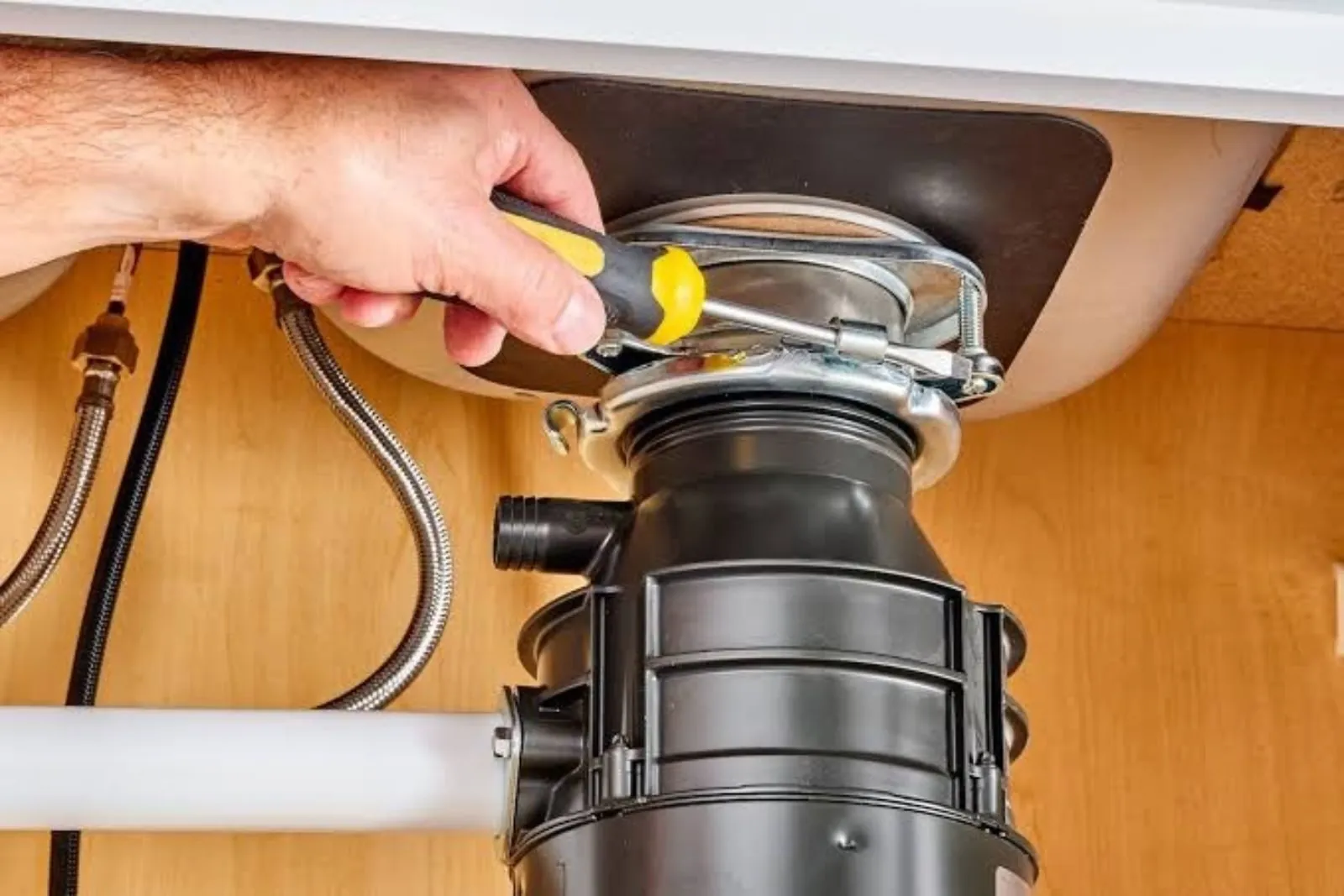
An InSinkErator disposal installation is a one to two hour job for a plumber when the sink already has a disposal flange and an electrical outlet. The new unit mounts under the sink drain, connects to the dishwasher hose and the drain trap, and plugs in or is wired in. The harder questions come first, such as which horsepower to buy and whether your sink and wiring suit it.
This guide walks through those choices so you can compare quotes. If your current disposal is jammed or leaking today, see garbage disposal repair.
Choosing a model
InSinkErator sells disposals in a range of horsepower, from about one third to one horsepower. A small household that cooks simply is fine with the lower end. A family that cooks daily benefits from three quarters horsepower or more, since the motor grinds more easily and jams less. Look at the grind stages, the noise rating and whether the unit is batch feed or continuous feed.
Continuous feed units run while the switch is on. Batch feed units run only when the stopper is in place, which many owners prefer around children. Ask for the model number so you can look up the warranty and the parts yourself.
Before you buy, check the sink and the wiring
Look under the sink. A double bowl sink with a standard 3.5 inch drain opening takes most disposals. A sink with a different opening or a stainless steel sink with a thin flange may need an adapter or a different mounting kit. Note the space below, since a deep unit might not clear the trap.
Check for power. A disposal needs a dedicated outlet inside the cabinet, or a hardwired connection to a switch. Many homes have a switched outlet already. If yours does not, an electrician has to add one, and the cost belongs in your budget. Never run a disposal from an extension cord.
What a proper installation includes
Each step has a purpose.
- Removal of the old unit.The old disposal is drained, unwired and unmounted.
- A new mounting assembly.The mounting ring and gasket seal the sink flange and carry the weight.
- Dishwasher connection.A knockout plug is removed so the dishwasher hose can drain into the unit.
- Trap and drain connection.A tight, properly sloped connection prevents leaks and slow drains.
- Electrical connection.A plug or a hardwired connection with a switch, installed safely.
- A water test.We run water and the unit to check for leaks before we leave.
Noise, vibration and warranty
Noise depends on the model and the sink. Units with extra sound insulation are quieter, and a stainless steel sink amplifies sound more than a composite one. A mounting that is not fully tight rattles, so a good installer checks it twice. Many manufacturers offer longer warranties on higher-end units, and a warranty on in-home service is worth looking for.
Register the unit when you install it, and keep the receipt. If a part fails inside the warranty period, you will need both.
Typical disposal sizes and uses
A rough match between horsepower and household.
| Horsepower | Household | Notes |
|---|---|---|
| One third to one half | One or two people, light cooking | Basic grinding, more prone to jams. |
| Three quarters | Families who cook most nights | Good balance of price and power. |
| One horsepower | Heavy use and large households | Quietest and strongest, highest cost. |
After the installation, a short checklist
Run cold water, switch the unit on and check for leaks at the flange, the trap and the dishwasher connection. Run the dishwasher briefly to confirm it drains. Show everyone in the house where the reset button is and where the switch sits. Keep the hex key socket tool taped inside the cabinet so a future jam is a one-minute fix.
What not to put in a disposal
A disposal is not a trash can. Grease and oil cool and coat the pipe downstream. Coffee grounds and eggshells in volume settle into a paste. Fibrous items such as celery, corn husks and artichoke leaves wrap around the blades. Pasta, rice and potato peels expand with water and clog the line.
Run cold water before, during and for about fifteen seconds after use. Cold water keeps grease solid so it flushes through. Hot water melts fat and sends it further down where it hardens again. A kitchen line that clogs even with good habits may need hydro jetting.
Cleaning and care that keeps the motor happy
Run the disposal for a few seconds with cold water to clear residue. Grind a handful of ice cubes every month or two to knock off buildup on the chamber walls. Use a cut lemon or a bit of baking soda for odor, and skip harsh chemical cleaners that corrode seals.
Never reach into the unit. If it jams, switch off the power, use the hex key socket at the bottom to turn the flywheel and press the reset button. If it hums and will not move, call us.
What affects the price of a disposal installation
The unit is part of the cost. The rest depends on the sink and the wiring.
- Model and horsepowerBigger motors cost more.
- Existing electricalA missing outlet or switch means an electrician's visit.
- Sink conditionA worn flange or a cracked drain may need replacing.
- Plumbing under the sinkA worn trap or shutoff valves are often replaced at the same visit.
- Hour of the callEvening and weekend visits carry a higher rate.
Ask what is included, such as haul-away and a new dishwasher connector.
Want your real number? Call (326) 465-0294
Codes and standards that apply
A disposal installation follows the manufacturer's instructions, the Ohio Plumbing Code for the trap and dishwasher connection and the National Electrical Code, known as NEC, for the power connection.
When replacement beats repair
A disposal older than ten years that leaks from the body, trips the reset again and again or has a seized motor is not worth repairing. The cost of a repair approaches the price of a new unit, and the new one comes with a warranty. If you are planning a kitchen remodel, replace it at the same time, since the counters and sink are already open.
Why Miamisburg kitchen drains behave the way they do
Miamisburg's city water was about 22 grains per gallon hard until the city opened a softening plant in October 2018. The 2022 water report puts the average near 7.5. Soap and fats react differently with harder water, and mineral scale narrows older drain lines.
If your kitchen drain slows even though the disposal works, the cause may be old buildup in the pipe past the trap. A camera check will tell you whether cleaning or a repair is the better answer.
Source: City of Miamisburg water reports at cityofmiamisburg.com/water-reports
Questions about garbage disposals
Many last eight to twelve years with good habits.
Often yes. It needs a compatible sink drain, a nearby outlet or a new one and room under the sink.
Like-for-like replacements often do not need one. Ask the building department about new wiring.
That depends on the system. Ask the manufacturer and the septic professional before you install one.
Often yes. A new drain hose and clamp cost little and prevent a slow leak under the sink.
City water is now moderately hard, so scale builds more slowly than it once did. Regular cold-water flushing and occasional cleaning keep a disposal working.
Ready for a new disposal, or the old one is failing? Call and we can talk through scheduling. We serve West Carrollton and Centerville as well.
Call (326) 465-0294