Dish soap by itself does not usually clog a drain. Liquid dish soap is mostly water and detergent that rinses away. The trouble starts when soap, grease, food scraps and minerals combine. In hard water, soap can form a scum that clings to pipe walls, and that scum catches grease and hair. Over months, the pipe narrows and a slow drain becomes a clog.
This guide explains how soap, grease and water chemistry interact, what to do for a slow kitchen drain and when to call. If your drain is already backing up, see drain cleaning, and use the 24/7 line for overflow.
What actually causes the clog
A kitchen drain carries water, food particles, fats and oils, and soap. Warm water keeps fats liquid as they leave the sink. Further down the pipe, the water cools and the fat hardens into a waxy coating. Soap scum, the film that forms when soap reacts with minerals in the water, sticks to that coating and thickens it.
Soap is not the villain. Fat is the main ingredient of most kitchen clogs, and soap is a helper. A heavy pour of detergent in a nearly blocked line can also make a mess, because foam backs up into the sink and over the counter.
Signs that buildup is forming
Catch these early and a cleaning costs far less than a repair.
- The sink drains slowly after washing dishes.A coating on the pipe walls narrows the flow.
- Gurgling after the water goes down.Air is squeezing past a partial blockage.
- A sour or greasy smell from the drain.Residue is rotting in the trap or the line.
- Water backs up into the second basin.A double sink shares a trap, and a block shows up there first.
- Suds that pop up in a nearby fixture.A blockage is pushing foam through the vent or another drain.
Why more soap does not mean cleaner pipes
A common habit is to squirt extra detergent into a slow drain and run hot water, hoping it will cut through the clog. Soap breaks up grease on a plate, but in a pipe it mixes with grease and minerals and can harden into a paste. The better move is to remove the blockage mechanically and then flush with plenty of water.
If a double sink backs up when you run only one side, the shared trap is the first place to look. Pull it, clean it and put it back.
Safe steps to try first
Start gentle, and stop if the water rises.
| Step | How | Watch for |
|---|---|---|
| Flush with hot water | Run the hottest tap for a minute | Do not use boiling water on PVC or on a cracked sink. |
| Baking soda and vinegar | Half a cup of each, wait fifteen minutes, flush | Mild help only, it does not remove a hard clog. |
| Plunge | Seal the other basin, plunge with firm strokes | Do not plunge after chemical cleaner. |
| Clean the trap | Place a bucket, loosen the nuts, clear it by hand | Wear gloves, the contents are unpleasant. |
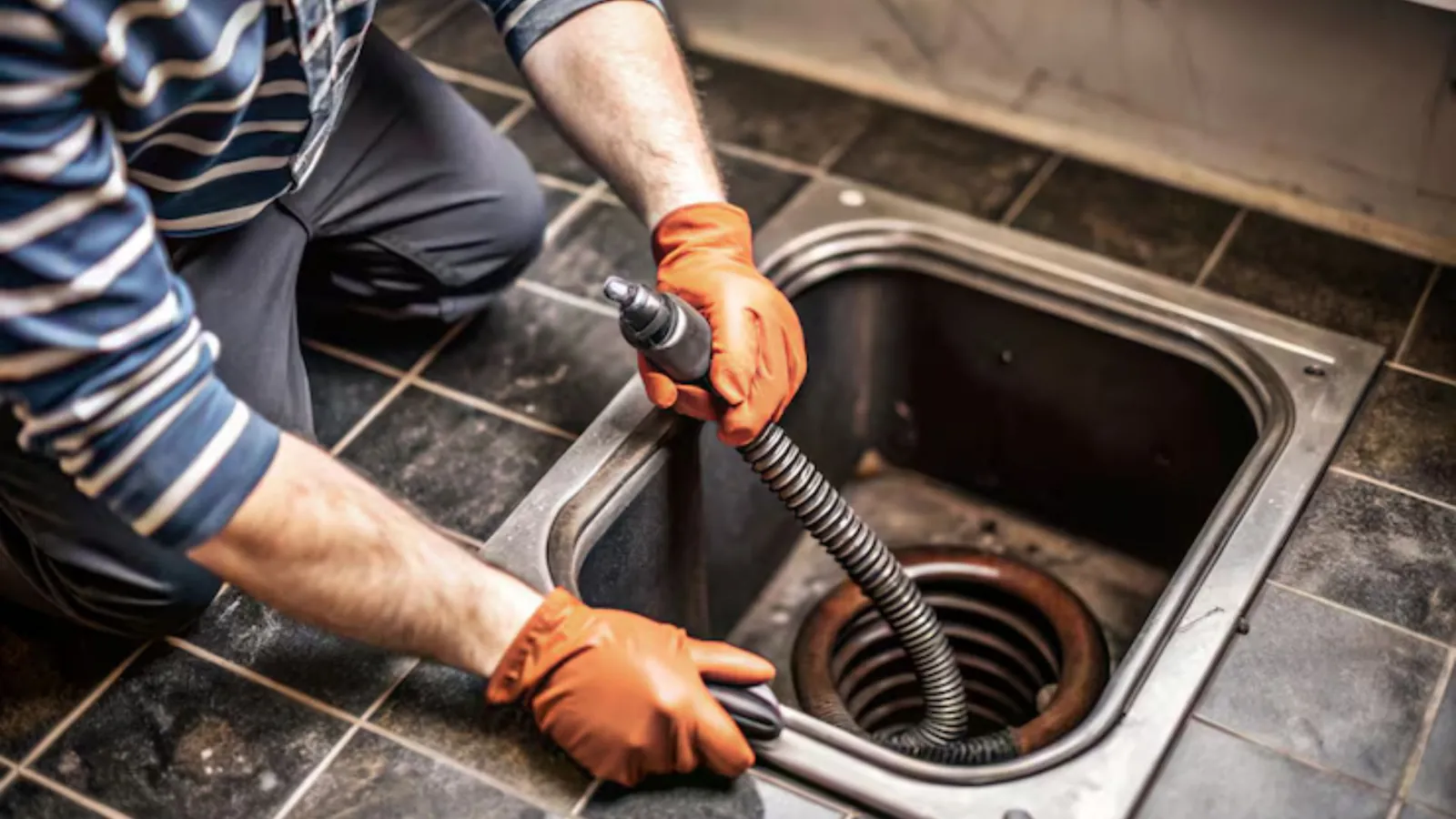
| Cable | A small hand auger reaches past the trap | Stop if you feel a hard stop and call. |
Why chemical drain cleaners are a poor choice
Caustic liquid cleaners can eat through a clog, and they can also damage old pipe, harm seals and sit in the line if the water does not drain. A plumber who then has to open the pipe faces standing caustic liquid, and that is a burn risk. Chemicals also do nothing for the grease coating along the pipe wall past the clog.
If you do use a cleaner, follow the label exactly, never mix products and tell the plumber afterward. A cable or a jet gets the whole pipe clean, and it is safer for the pipe and for the person working on it.
Habits that keep a kitchen drain clear
Scrape plates into the trash before washing. Wipe greasy pans with a paper towel first. Pour cooled cooking fat into a can and put it in the trash, not the drain. Use a sink strainer. Run hot water for a few seconds after you wash dishes, then cold water to flush. Use a reasonable amount of dish soap rather than a heavy pour.
Once or twice a year, run a long hot flush and a baking soda rinse. If you cook with a lot of fat, or the drain is already slow, a professional cleaning every year or two may be cheaper than waiting for an emergency.
What affects the cost of clearing a kitchen drain
A simple clog is a short visit. The cost goes up with the problem.
- Location of the clogA clog in the trap is quick, one in the main line is not.
- MethodCabling is the usual first step, jetting costs more.
- AccessA sink with no cleanout takes longer.
- Camera checkLooking at the line adds time and shows the cause.
- Hour of the callEvening calls carry a higher rate.
Ask what is included, and whether a camera pass can be added if the clog returns.
Want your real number? Call (326) 465-0294
What about suds in the washing machine drain
Too much detergent in a washer sends suds up the standpipe and onto the floor. High-efficiency machines need a low-sudsing detergent and a small dose. If suds appear in a sink or tub when the washer drains, the shared line is partly blocked. A plumber can clear it, and a lint filter on the washer hose helps keep fibers out of the drain.
Codes and standards that apply
Drain and trap design follows the Ohio Plumbing Code in Ohio Administrative Code Chapter 4101:3. Detergent labels carry their own safety guidelines, and drain cleaner labels warn against mixing products, according to the makers.
When it is not the soap at all
If more than one fixture is slow, the problem is further down, in the branch or the main line. If sewage smell comes up through a floor drain or the toilet gurgles when you run the sink, stop using water and call. A kitchen clog that returns every few weeks after a cable points to a coated pipe, and that is the case for hydro jetting.
Why Miamisburg water chemistry matters here
The City of Miamisburg softened its water starting in October 2018. Before that, hardness averaged about 22 grains per gallon. The city's 2022 report puts the average near 7.5 grains per gallon, or 128 milligrams per liter. Soap scum forms more easily in hard water, so older drains that saw years of harder water may carry more buildup than a newer line.
If you live in an older Miamisburg home, a camera pass on a stubborn kitchen line may show scale and grease together. That explains why a cable clears the clog and the slow drain returns.
Source: City of Miamisburg water reports at cityofmiamisburg.com/water-reports
Questions about soap and slow drains
Yes, in normal amounts. It rinses away and does not damage pipes.
A partial blockage or a vent problem pushes foam back up. Reduce the soap and have the drain checked.
It moves grease along, and the grease hardens again when it cools. Hot water alone is not a cure.
A little is fine. Use cold water and plenty of it.
If the sink drains slowly after you have tried the basic steps, or any other fixture is slow, call.
Softer water forms less scum than hard water, so new buildup is slower. Older pipes may still carry coating from earlier years.
Slow drain that keeps coming back? Call and we can clear it. We serve Springboro and Moraine. A full line may need sewer line cleaning.
Call (326) 465-0294