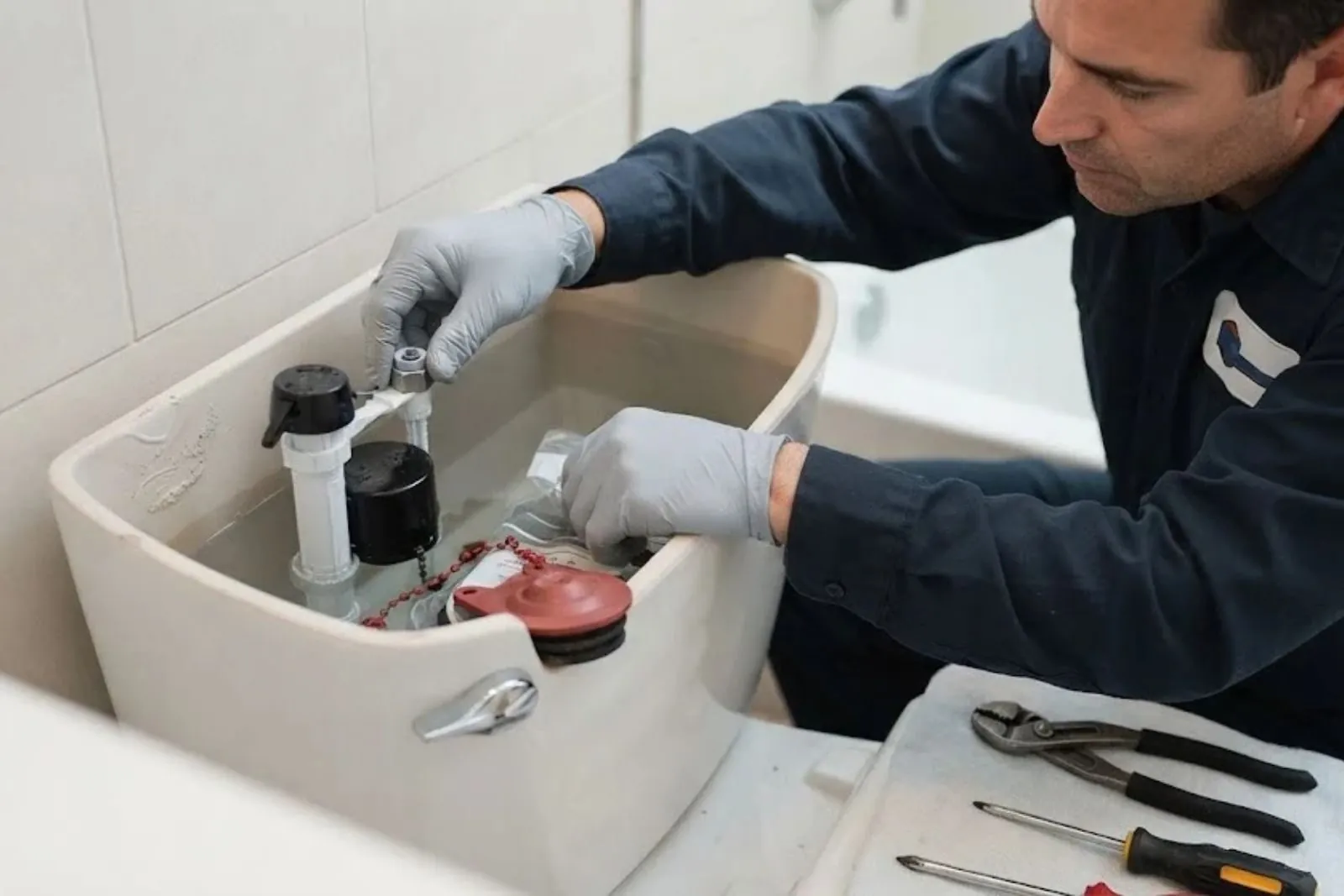
A cracked toilet bowl or tank usually cannot be repaired for good. Epoxy and sealants may slow a hairline leak for a short time, but porcelain flexes with weight and temperature, and the crack returns. The safe answer is to replace the toilet, and to shut off the water at the valve behind it until you do.
This guide explains how to tell a crack from a stain, when a temporary fix is acceptable, how replacement works and what drives the price. If water is on the floor now, shut the valve and call the 24/7 line. See also toilet repair.
How to tell if the bowl is really cracked
Wipe the porcelain dry and look in good light. A crack often shows as a thin dark line, sometimes with a slight ridge you can feel with a fingernail. A craze of fine surface lines is only the glaze and is usually harmless. A crack that runs below the water line or through the base is the one that leaks.
Dry the outside completely, then put a few sheets of toilet paper around the base and watch them. Dampness that returns after the floor is dry points to a leak. A tank that sweats in humid weather can look the same, so check the condition of the tank too.
Why porcelain cracks in the first place
Porcelain is hard and brittle. Common causes include a heavy impact such as a dropped lid, over-tightening the base bolts and a toilet set on an uneven floor, which puts constant stress on one side of the base. Freezing is a cause in cold weather if water sits in an unheated bathroom. Age plays a part too, since small cracks grow with each flush.
Knowing the cause matters. If a toilet cracked because the floor is uneven or the flange is too high or low, a new toilet will crack for the same reason. A plumber checks the floor and flange before setting the new one.
What to do right away
A few steps protect the floor.
- Shut the valve behind the toilet.Turn it clockwise until it stops.
- Flush once to empty the tank.That removes most of the water from the tank.
- Mop and dry the area.Standing water rots subfloor and breeds mold.
- Stop using the toilet.A crack under load can fail without warning.
- Call a plumber.A cracked bowl is a replacement job.
Repair or replace
Where a repair might hold and where it will not.
| Damage | Option | Outlook |
|---|---|---|
| Hairline crack in tank, above the water line | Temporary epoxy | Short term only. |
| Crack in the bowl below the water line | Replace | Will leak again. |
| Cracked base or flange area | Replace and check the flange | Unsafe to repair. |
| Crazing only | No repair needed | Cosmetic. |
Can a temporary fix get you through the weekend
If a plumber cannot come right away, there are a few ways to buy time. Keep the water off at the valve and flush by pouring a bucket of water into the bowl when you need to use the toilet. If you have a second bathroom, use that one. Do not tighten the base bolts any further, since that can finish the crack.
A hairline crack in a tank above the water line can be sealed with a two-part epoxy made for porcelain. Clean and dry the surface, apply the epoxy and let it cure fully. Treat it as a bridge to a replacement, not a repair, and keep an eye on it each day.
What a replacement involves
The plumber shuts the water, drains the tank and bowl, disconnects the supply and removes the bolts at the base. The old wax ring is cleaned off, the flange is checked and a new wax ring or a wax-free seal goes down. The new toilet is set, bolted, leveled and connected, then tested for leaks and a solid flush.
A cracked bowl is a good moment to check the flange and the floor. A rotted floor or a broken flange has to be fixed or the new toilet will rock. If other fixtures are tired as well, plumbing installation covers updating them in one visit.
Hidden damage to look for after a leak
A leaking toilet can soak the floor for weeks before anyone notices. Press on the floor around the base. If it feels soft, springy or spongy, the subfloor has taken water. Look for stained or lifting flooring, a musty smell and moisture in the ceiling below. Mold needs only a damp spot to grow.
Tell your insurance agent if the floor is damaged. A sudden leak may be covered, while long-term seepage often is not. Photographs with dates help your claim.
What affects the price of replacing a toilet
The toilet itself is only part of the bill.
- The toilet modelComfort height and dual flush models cost more.
- Flange and floor conditionRepairs add materials and time.
- Supply line and valveOld shutoff valves are replaced at the same visit.
- Hauling away the old toiletAsk whether it is included.
- Hour of the callEvening and weekend calls carry a higher rate.
Choose a toilet with a flush rating that suits your drain. A high-efficiency model on a long old drain may need cleaning help.
Want your real number? Call (326) 465-0294
Codes and standards that apply
Toilets that carry the EPA WaterSense label use no more than 1.28 gallons per flush. Installation follows the Ohio Plumbing Code in Ohio Administrative Code Chapter 4101:3, including flange height and supply connections.
Low-flow toilets and older drains
A newer toilet uses about 1.28 gallons per flush, down from 3.5 gallons in older models. That saves water. It also means less water to carry waste down a long, old drain. If the drain slopes poorly or has buildup, a new toilet may clog more often. A cleaning or camera check before the swap tells you what the drain can handle.
Why older Miamisburg toilets crack and leak
The City of Miamisburg softened its water in October 2018. Before that, hardness ran about 22 grains per gallon, and the 2022 water report averages about 7.5. A toilet that has been in service since before then has lived through years of mineral scale on its fill valve and rim jets.
Scale does not crack porcelain. It does wear the valves, and a worn valve can cause a constant fill that stresses the tank. If you replace a toilet, replace its supply line and shutoff valve too, so the new one starts with fresh parts.
Source: City of Miamisburg water reports at cityofmiamisburg.com/water-reports
Questions about cracked toilets
It may seal a hairline crack for a time. It is not a lasting repair.
Impact, over-tightened bolts, uneven floors and repeated temperature swings are common causes.
It is risky. A crack can fail suddenly, and leaks damage the floor.
A standard replacement is usually done within a couple of hours, longer if the flange or floor needs work.
A tank crack leaks water onto the floor but is not under sewage. Either way, the fix is replacement.
Only a temporary one. Shut the valve, dry the floor and call a plumber. The line is open at any hour if water is spreading.
Toilet cracked or leaking? Shut the valve and call. A plumber can often replace it, including in Centerville and Miami Township.
Call (326) 465-0294