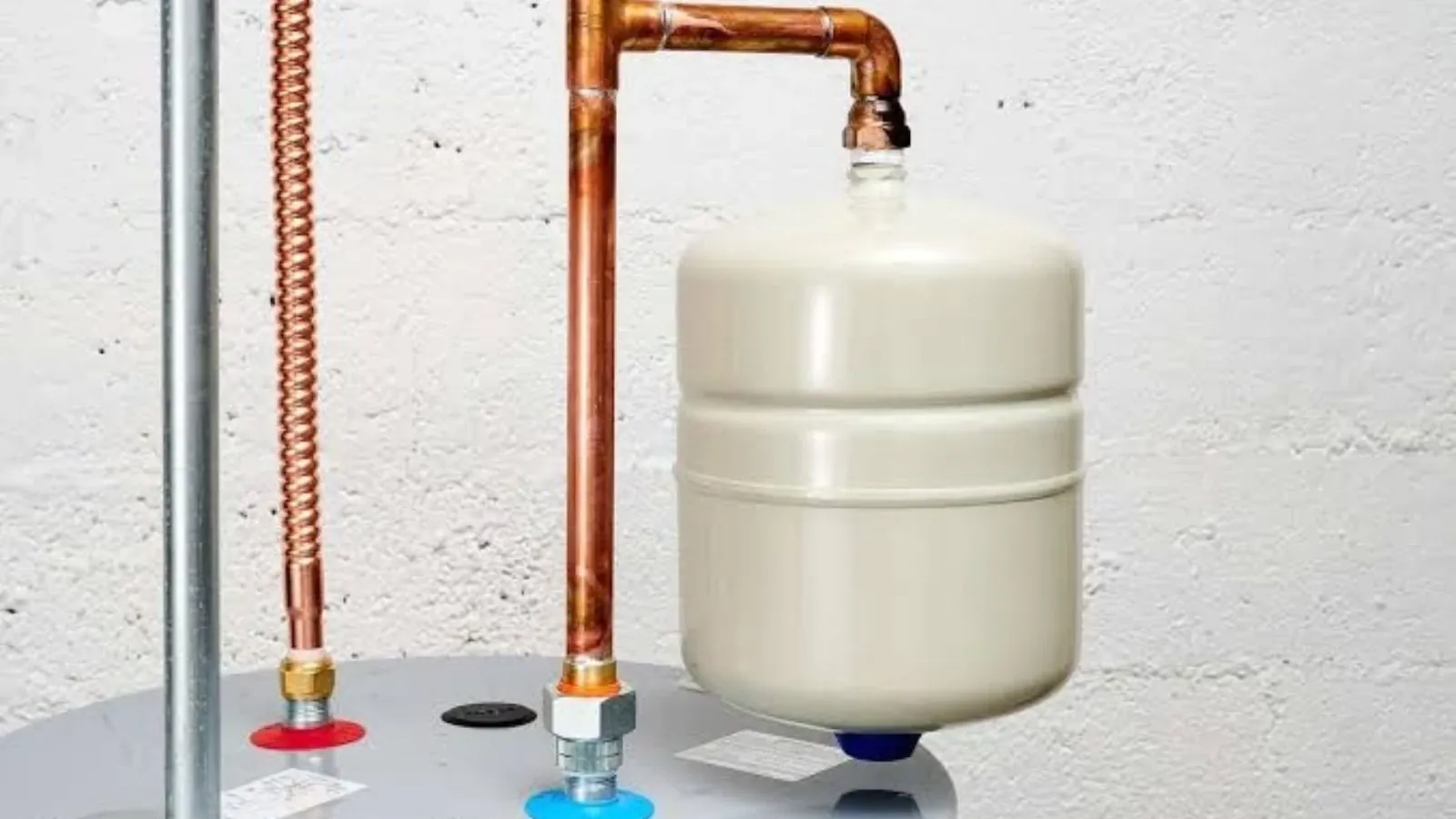
A boiler expansion tank gives heated water room to expand, so the pressure in the system stays steady. When the air cushion inside it fails, the tank is called waterlogged. The boiler pressure swings, the relief valve may discharge and the system can be noisy or short cycle. Replacing the tank is usually a short, inexpensive job compared with the damage it prevents.
This guide explains how to recognize a failed tank, how a plumber tests it and when replacement makes sense. If you have no heat or water is leaking from the boiler, call the 24/7 line right away.
How an expansion tank works
Water expands as it heats. In a closed hydronic system, the water has nowhere to go, so the pressure climbs. The tank has a rubber diaphragm or bladder, with water on one side and pressurized air on the other. As the water expands, it presses into the tank and compresses the air. When the system cools, the air pushes the water back.
The air side is charged to match the fill pressure of the system, often around 12 to 15 pounds. If the diaphragm splits or the air leaks out, the tank fills with water and stops cushioning. That is a waterlogged tank.
Signs the tank has failed
These symptoms often show up together.
- Pressure spikes when the boiler heats.The gauge climbs well above the normal range.
- The relief valve drips or discharges.Water escapes because the pressure has nowhere to go.
- Frequent need to add water.A pressure drop may mean water is leaking from the tank or system.
- The tank feels full or heavy at the bottom and top.A good tank is cool and hollow at the top.
- Water drips from the air valve.The Schrader valve spits water, not air.
Why the tank matters to the whole system
A boiler loop is a sealed system. Water in the pipes and radiators expands when heated, and the expansion has to go somewhere. Without a working tank, the pressure rises until the relief valve opens, sending hot water to the floor drain or the floor. Every opening of the relief valve wastes water and chemistry, and it adds fresh oxygen that rusts the boiler from inside.
A tank in good shape keeps the pressure steady, which also protects the circulator pump, the radiators and the pipe joints from stress. That is why a small tank costs so little compared with the damage a bad one allows.
Quick test, then the usual fix
A plumber confirms the problem with a simple check.
| Test | Result | Meaning |
|---|---|---|
| Tap the tank | Hollow on top, solid on bottom | Normal. |
| Tap the tank | Solid all over | Waterlogged. |
| Press the air valve | Air comes out | Air side is intact. |
| Press the air valve | Water comes out | Diaphragm has failed, replace the tank. |
Sizing and installing the new tank
A replacement tank must match the system. The size depends on the volume of water in the loop, the fill pressure and the highest temperature. A tank that is too small fails early. Your plumber reads the boiler data plate, estimates the water volume and picks a size with some margin. A tank on its own isolation valve makes later service quick, since you can change it without draining the whole system.
The tank should hang or stand on proper supports, with the air valve accessible. It must be installed on the correct side of the circulator, which is usually the suction side. Tell the installer if you hear gurgling or see air in the radiators, since position and air removal go together.
Repair or replace
If the tank lost its air charge but the diaphragm is sound, the plumber can drain the system pressure, recharge the air side and put it back in service. If water comes from the air valve, the diaphragm has failed and the tank must be replaced. Replacement means draining part of the loop, swapping the tank and refilling and purging the system.
While we are there, we check the fill valve, the relief valve and the air vents, and we look for slow drips with leak detection methods when pressure keeps falling. A tank is rarely the only worn part in an old system. If the boiler itself is failing, water heater repair and heating service are different trades, and we tell you plainly what we handle.
What affects the cost of expansion tank work
A tank is a small part, and the cost depends on the system around it.
- Tank sizeA larger system needs a larger tank.
- AccessA tank in a crawlspace or tight closet takes longer.
- Draining and purgingA bigger loop takes longer to drain and bleed.
- Related partsA worn relief or fill valve is often replaced at the same time.
- Hour of the callA winter night call carries an after-hours rate.
Ask for a written description of what was replaced and the pressure settings used.
Want your real number? Call (326) 465-0294
Simple habits for the heating season
Before the first cold week, look at the pressure gauge with the boiler cold. Most residential systems sit around 12 to 15 pounds when cold and rise a few pounds when hot. A gauge that sits at zero, or one that swings high, needs attention. Bleed the radiators if they have trapped air, and check for stains or moisture near the tank and the valves.
Keep the area around the boiler clear. Do not store paint or cleaning chemicals nearby. If you smell gas or notice soot, shut the system down and call the gas utility and a licensed professional before you restart it.
Codes and standards that apply
Boiler work follows the manufacturer's instructions and the mechanical and plumbing standards the state adopts. Relief valves on hot water boilers are rated by the boiler's maker, and discharge piping is run according to the Ohio Plumbing Code.
When to call for urgent help
If the boiler is dripping hot water, the pressure gauge is above 30 pounds or the system makes banging noises, turn it off at the switch if it is safe to do so and call the 24/7 line. A relief valve that discharges steadily is a safety device doing its job, and it needs a repair, not a bucket.
Local rules for boilers and fuel gas piping
The City of Miamisburg Building Department regulates fuel gas piping and HVAC equipment in the city. If your boiler work touches the gas line or the venting, call (937) 847-6533 with approval questions, or (937) 847-6532 for inspections.
Older homes in the historic center often have older boilers and original piping. If yours is more than twenty years old, a pressure test and a visual check of the tank, valves and joints are a smart yearly habit before the heating season.
Source: City of Miamisburg Building Department, (937) 847-6533, listed in the city directory at cityofmiamisburg.com
Questions about boiler expansion tanks
Eight to fifteen years is typical. Pressure swings and leaks end it sooner.
A handy owner can with a gauge and a pump, but the system pressure must be off the tank first. Many people prefer a plumber.
Excess pressure from a failed tank is a common cause. A worn relief valve is another.
It can be if the relief valve is discharging. Shut down the boiler if you can do so safely and call.
Often yes, if the valve is old. They work as a pair, and replacing both avoids a second visit.
Start with the Miamisburg Building Department at (937) 847-6533. It regulates fuel gas piping and HVAC, and it can tell you what applies to your project.
Boiler pressure swinging or the relief valve dripping? Call the 24/7 line and we can look at it. Our crews reach Springboro and Moraine too.
Call (326) 465-0294